
Updated: October 13, 2026
Before ordering a Cummins-powered silent diesel generator, ask for a model-specific configuration sheet, engine identification, noise test conditions, acceptance test plan, applicable documents and written warranty terms. Compare suppliers against the same project requirements so you can see what each quotation actually includes.
This checklist focuses on supplier and document verification. For load assessment and configuration planning, see our industrial generator selection guide.
1. Match the engine identification to the quoted unit
Request a clear engine dataplate photograph, the engine model and Engine Serial Number (ESN). Ask the supplier to identify which assembled generator the photograph belongs to. Check that the quotation, inspection records and final packing documents refer to the same configuration.
Cummins provides engine dataplate information, parts catalogs and service information through QuickServe Online. Use the ESN for the relevant technical information and contact a Cummins service location if records or identification need clarification. An ESN lookup alone does not establish that an independent supplier is an authorized Cummins dealer or that its assembled genset carries a particular warranty.
2. Ask what an authorization claim covers
If a supplier claims official authorization, request the issuing organization, registered company name, certificate or reference number, validity dates and scope. Ask how you can verify those details directly with the issuer. Engine sourcing, dealer status and authorization to assemble a generator are separate questions; record the specific claim being made.
3. Compare a complete configuration sheet
- Output: stated kW and kVA, rating category, voltage, frequency and phase.
- Components: engine model, alternator model, controller model and included protection devices.
- Package: canopy, fuel tank, batteries, charger, accessories and any quoted ATS or remote monitoring equipment.
- Scope: included items, optional items, installation responsibilities and exclusions.
A matching power label does not make two quotations equivalent. Ask each supplier to identify any substituted component and obtain approval for changes before production.
4. Make noise claims comparable
Request the measured dB(A) value together with measurement distance, operating load, test setting and the exact enclosure configuration. Ask for the report that supports the quoted value. Avoid comparing a measurement at one distance or load with a measurement taken under different conditions.
Write your site noise requirement into the enquiry. If a third-party test is required, agree on who performs it, what is measured and what acceptance criteria apply before placing the order.
5. Agree on documents and acceptance evidence
Ask your importer or project adviser which documents apply to the destination and intended application. Request copies that identify the covered product or engine, issuer and applicable scope. A company-level certificate should not be treated as proof that every generator configuration meets every destination requirement.
- Request the proposed factory acceptance test procedure and agreed pass criteria.
- Ask how the unit identification, test results, photographs and inspection date will be recorded.
- List the manuals, wiring diagrams, packing information and technical datasheets to be supplied.
- Agree how any failed test or configuration discrepancy will be corrected and documented.
6. Put warranty and delivery terms in writing
Confirm the responsible warranty provider, covered components, time and operating-hour limits, exclusions, claim process and service arrangements at the destination. Ask whether any engine manufacturer warranty is separate from the assembler’s warranty, and how eligibility will be confirmed for the supplied unit.
The quotation should also state production lead time, delivery terms, packing scope and required document timing. Agree which milestones trigger inspection, approval and shipment. Keep the accepted configuration and subsequent changes with the order records.
Frequently asked questions
Does a genuine Cummins engine make the whole genset a Cummins-manufactured product?
Verify the engine manufacturer and the genset assembler separately. Ask who takes responsibility for the assembled unit, its configuration, testing and warranty.
Can I compare two suppliers using only their noise number?
Compare the measurement distance, load, test setting and enclosure configuration as well as the dB(A) number. Request supporting reports for the units being quoted.
What should I send with a supplier enquiry?
Send your required power or load list, operating duty, voltage, frequency, phase, application, quantity, delivery destination and required documentation. Include the noise requirement and preferred component choices if these have been specified.
Discuss your generator requirements
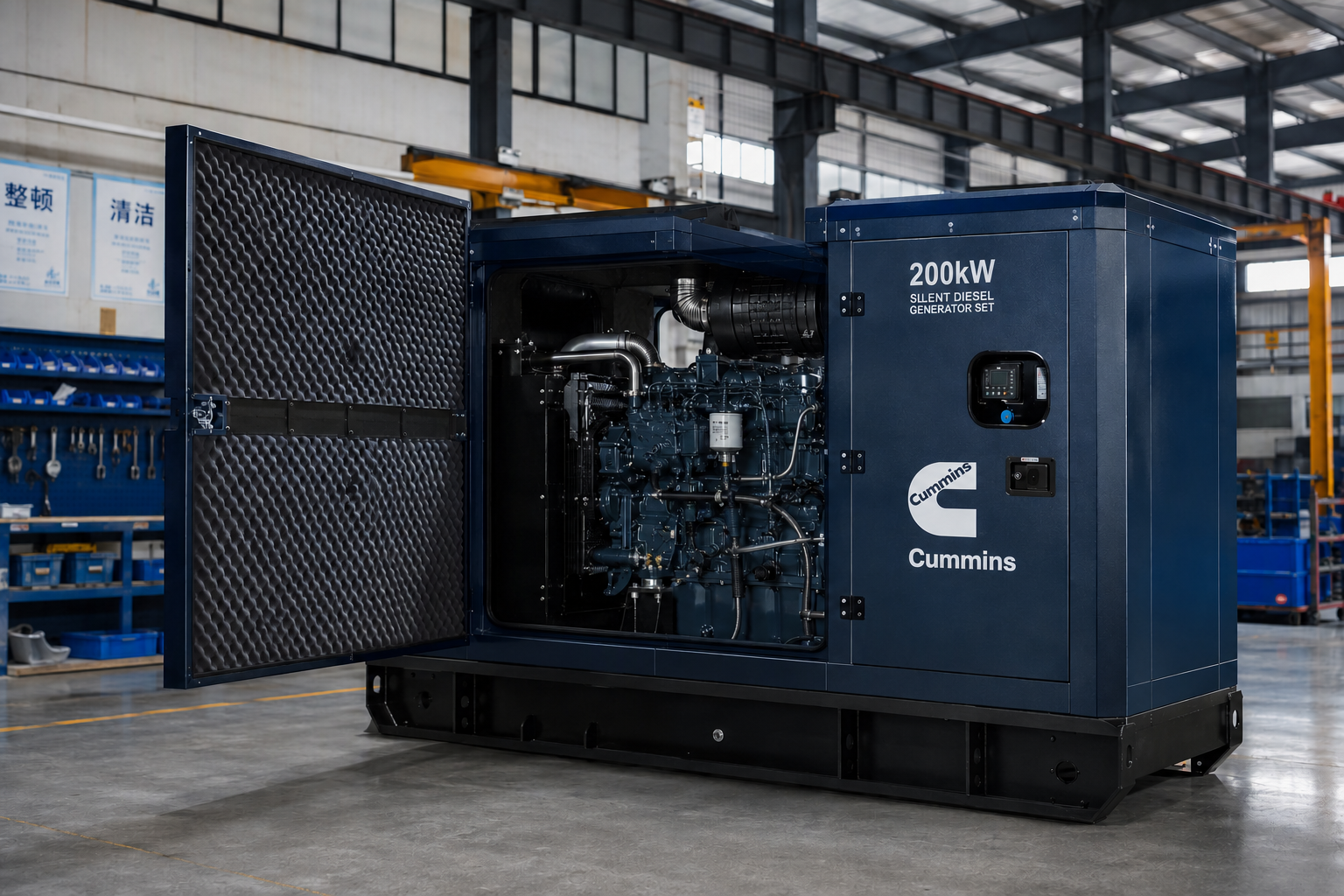
Browse the GoCommins generator product catalogue, review the 200kW / 250kVA configuration, or send a technical enquiry with your project details.
Official reference
Cummins technical information and QuickServe Online — engine-specific manuals, dataplate information and parts information. This reference explains the technical lookup resource; it does not verify a supplier’s authorization or a particular GoCommins configuration.