
📅 Last Updated: June 28, 2026
You’ve spent weeks scouring trade shows and Google searches, looking for the perfect 100kW Cummins silent diesel generator to anchor your premium brand in Canada. You find a price that looks too good to be true, the sales rep is incredibly polite, and they promise you “100% genuine” everything. But the moment the container door opens in Vancouver, you realize the “silent” canopy rattles like a bag of bolts, and the EPA sticker looks like it was printed in a basement. Your profit model—the one where you rebrand and sell at a premium—just went up in smoke. It’s the classic B2B nightmare: a mix of certificate forgery, shipping delays, and technical mediocrity that turns a CEO’s hair gray overnight.
To buy a Cummins silent diesel generator successfully, you must prioritize genuine engine verification through the official Cummins global database, ensure compliance with regional emission standards like EPA Tier 4 Final for North America, and demand high-density acoustic mineral wool insulation in a 2mm-4mm steel canopy. Always verify the alternator’s insulation class is “H” and confirm that all safety certifications, such as UL 2200 or CSA, are verifiable through the issuing body’s website to avoid customs seizures and branding disasters.
Don’t let the “inefficient communication” of middleman sales reps ruin your peak sales season. I’m Alex Zhang, and I don’t just sell generators; I live on the factory floor with 5 production lines of heavy-duty machinery. Stick with me for a few minutes, and I’ll give you the expert’s magnifying glass to spot the difference between a high-end power solution and a blue-painted boat anchor.
How to Navigate the Emission Standard Maze?
If you’re a buyer like my friend Mark Shenng in Canada, the first thing you need to worry about isn’t the price; it’s the legal red tape. North America has the world’s strictest nonroad diesel engine standards. If you try to import a Tier 2 engine into a Tier 4 market, US or Canadian Customs will seize your container faster than you can say “logistics.” For a distributor, this is a total loss.
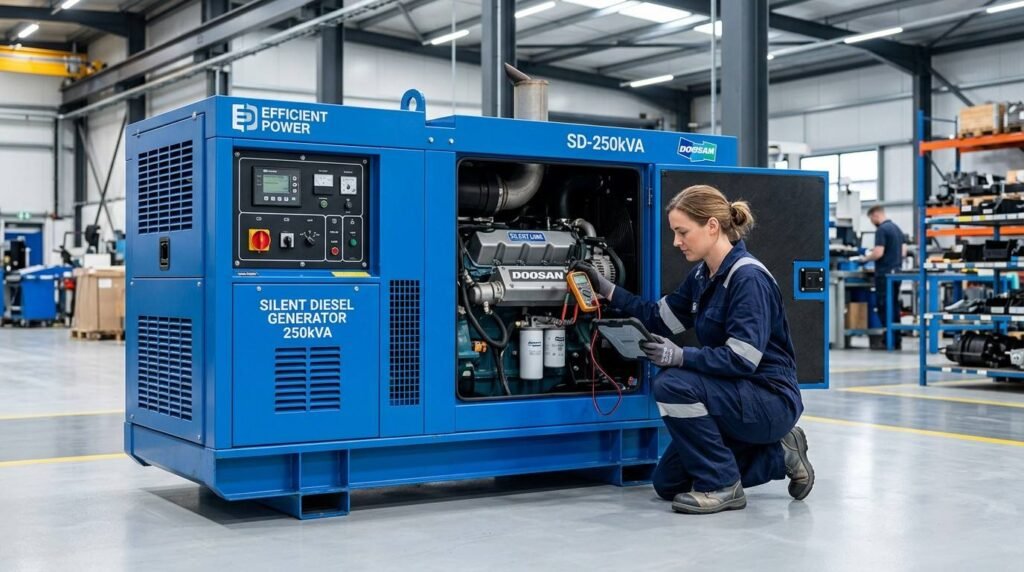
At GoCommins, we specialize in customizing gensets to match your specific market. For the North American market, that means Selective Catalytic Reduction (SCR) and Diesel Particulate Filters (DPF) are non-negotiable. I tell my procurement managers all the time: “If your supplier doesn’t know what a DEF tank is, they shouldn’t be shipping to Canada.” We provide the official EPA engine family certificate with every unit to ensure you clear customs without a single headache.
Genuine Cummins or “Blue-Painted” Fakes?
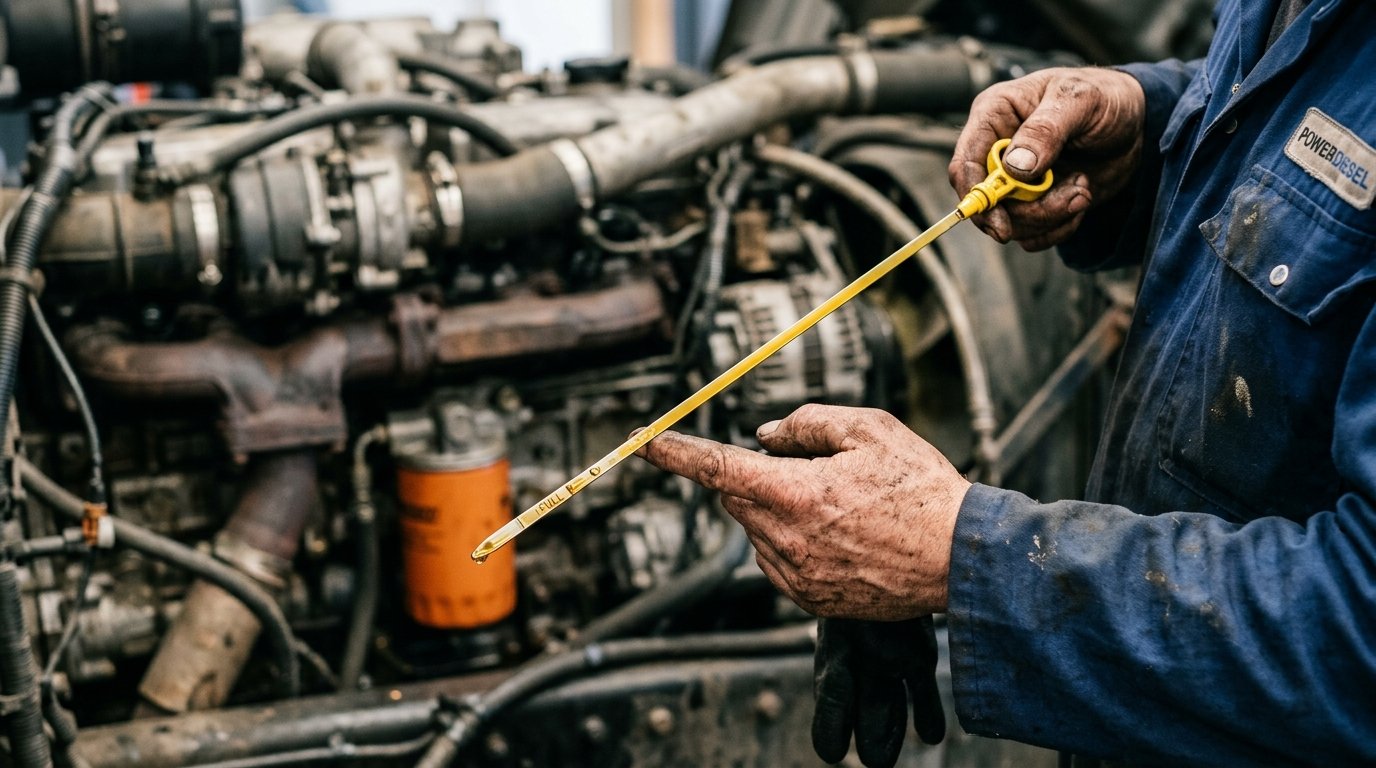
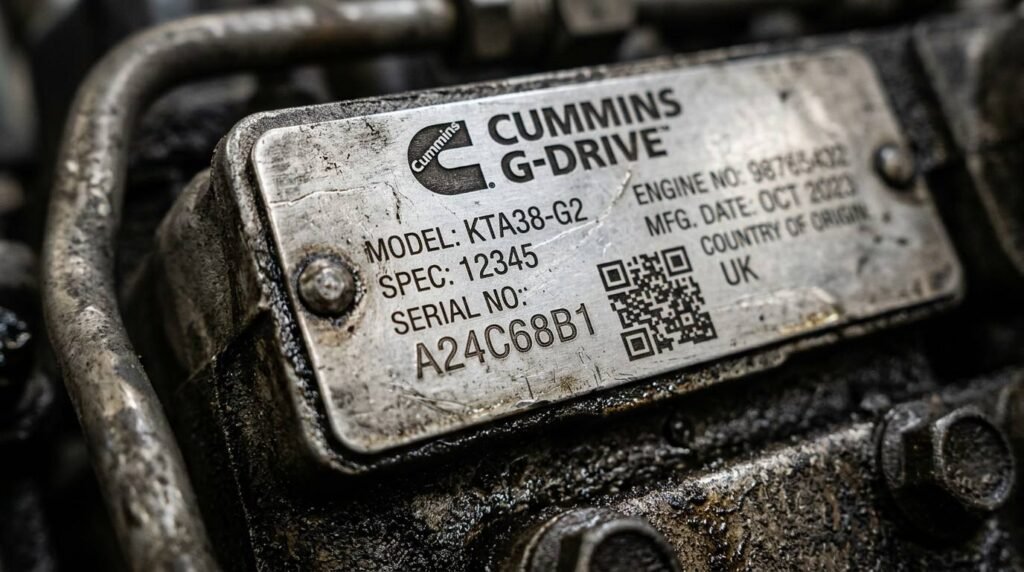
In the B2B world, the “fake” is the ultimate profit-killer. A common trick I see from trading companies is taking a refurbished truck engine, painting it blue, and slapping a “Cummins” sticker on it. These engines are not designed for the 24/7 G-Drive requirements of a stationary generator. They will fail under load, and they will fail when your customer needs them most.
As an authorized OEM, I insist on serial number transparency. Every engine that hits my production lines is verified through the Cummins genuine parts system. I always tell Mark: “If the price is 30% lower than everyone else, you aren’t buying a Cummins; you’re buying a lawsuit.” Check the cylinder block casting and the turbocharger model. A genuine Cummins engine is a work of art; a fake is just a very heavy paperweight.
Why the Canopy is More than Just a Pretty Box?
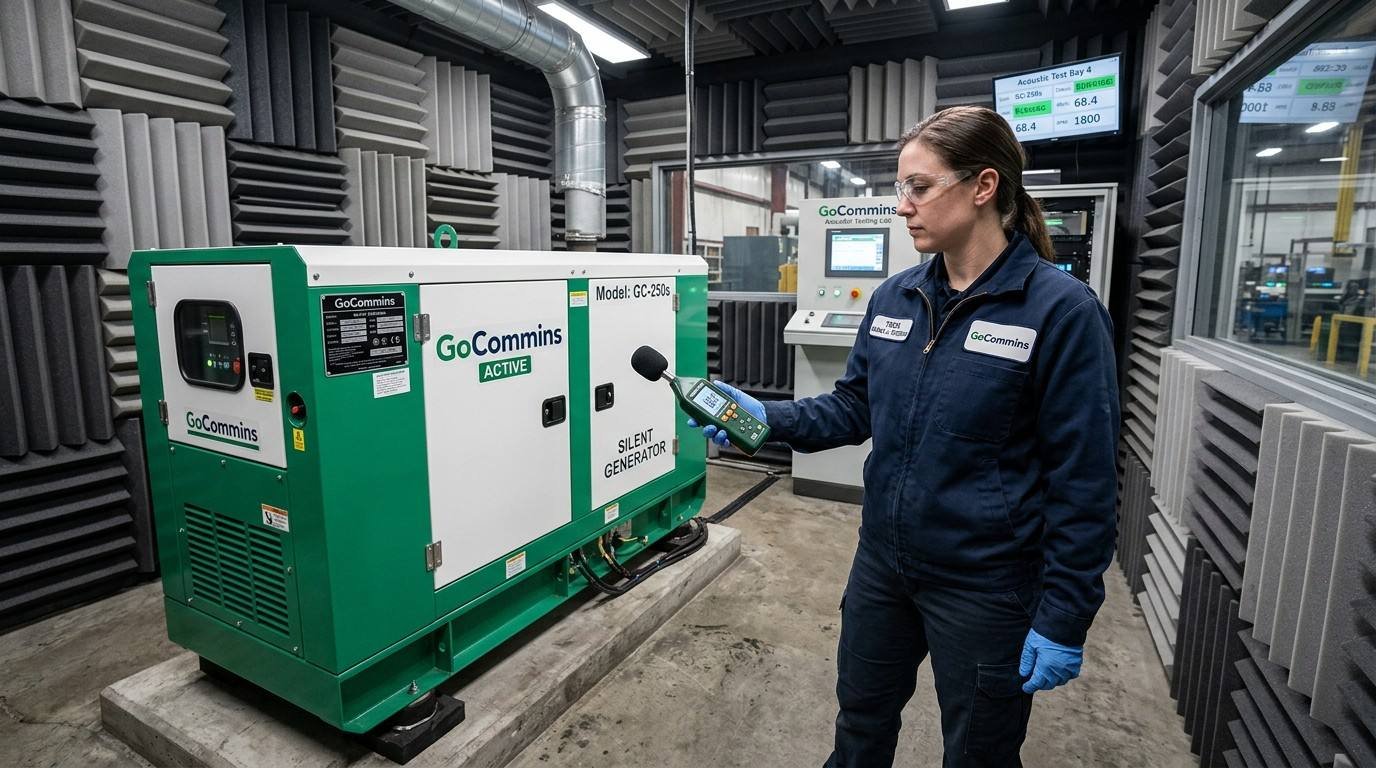
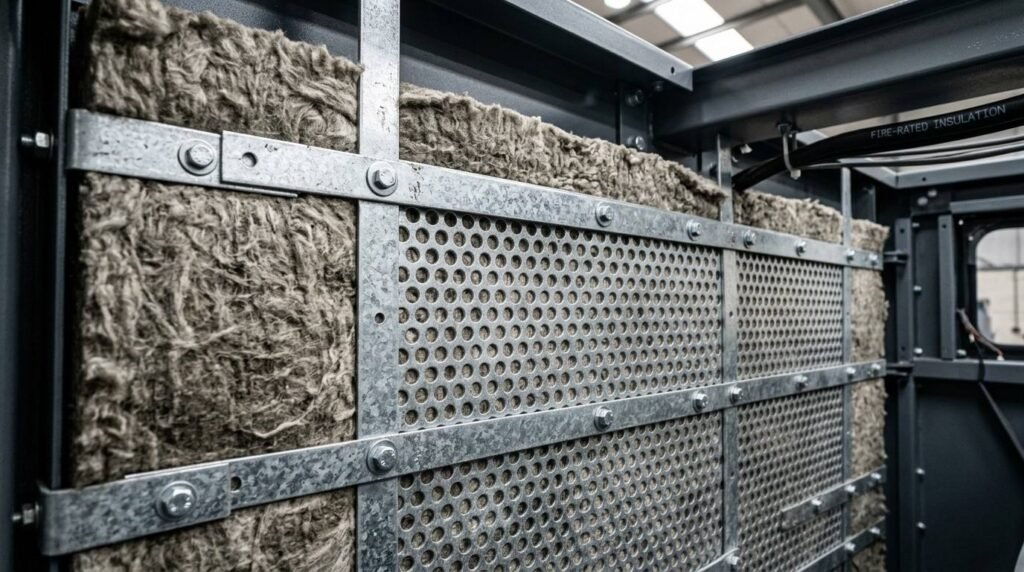
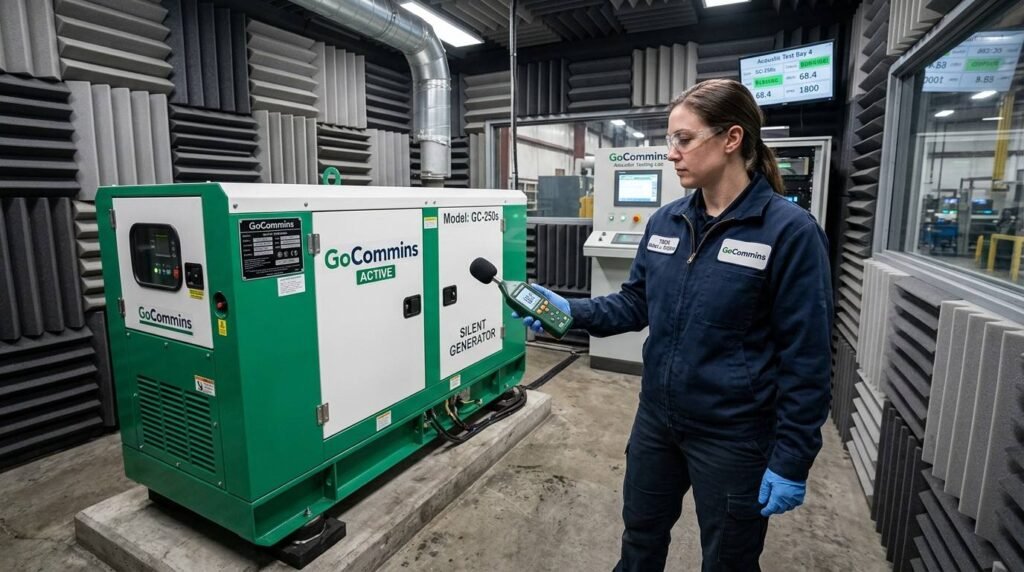
“Silent” is a word that suppliers use very loosely. In the factory, we measure silence in decibels (dB), not adjectives. To hit the 65-75 dB(A) at 7 meters standard required by many North American cities, you need mass. That means using 2.0mm to 4.0mm cold-rolled steel. If the canopy is made of thin 1.2mm sheets, it will vibrate and actually amplify the engine noise.
Inside the canopy, we don’t use cheap flammable sponge. We use high-density, fire-resistant mineral wool. It’s heavy, it’s expensive, and it’s the only thing that works. We also design a “Labyrinth Baffle” system for the air intake. Sound waves are lazy; if you make them turn enough corners, they give up and die. Mark Shenng rebranding strategy depends on this quality. His customers expect a “premium” feel, and nothing feels less premium than a generator that sounds like a jet engine having a breakdown.
Choosing the Right Alternator: Stamford vs. the World?
The engine makes the motion, but the alternator makes the money. Many buyers lack technical expertise here and let suppliers substitute a genuine alternator for a “copy” to save a few hundred dollars. At GoCommins, we pair our engines with Genuine Stamford alternators. Why? Because of the insulation.
A high-quality alternator needs Class H insulation to survive the heat of a 100% load run. A clone alternator uses lower-grade copper and insulation that will melt during a peak sales season heatwave. I tell my distributors: “The alternator is the heart of the electricity; don’t buy a knock-off heart.” A genuine Stamford unit offers higher efficiency and a global service network that protects your brand’s reputation long after the sale is made.
Forgery Defense: How to Spot a Fake Certificate?
Mark Shenng’s biggest headache is “occasional certificate forgery” by suppliers. It makes me angry because it gives the whole industry a bad name. Suppliers will Photoshop a UL or CSA logo onto a generic PDF and hope the customs officer is having a bad day. Don’t fall for it. Genuine certifications like UL 2200 for stationary generators are rigorous and expensive to maintain.
Before you pay a cent, ask for the file number. Go to the UL Online Certifications Directory or the CSA Group Product Listing and verify the manufacturer’s name. If it’s not there, it’s not real. At GoCommins, we provide a full, verifiable certification pack with every export. We handle the quality inspection and the red tape so you can focus on dominating your local market. Transparency isn’t just a buzzword for us; it’s our business model.
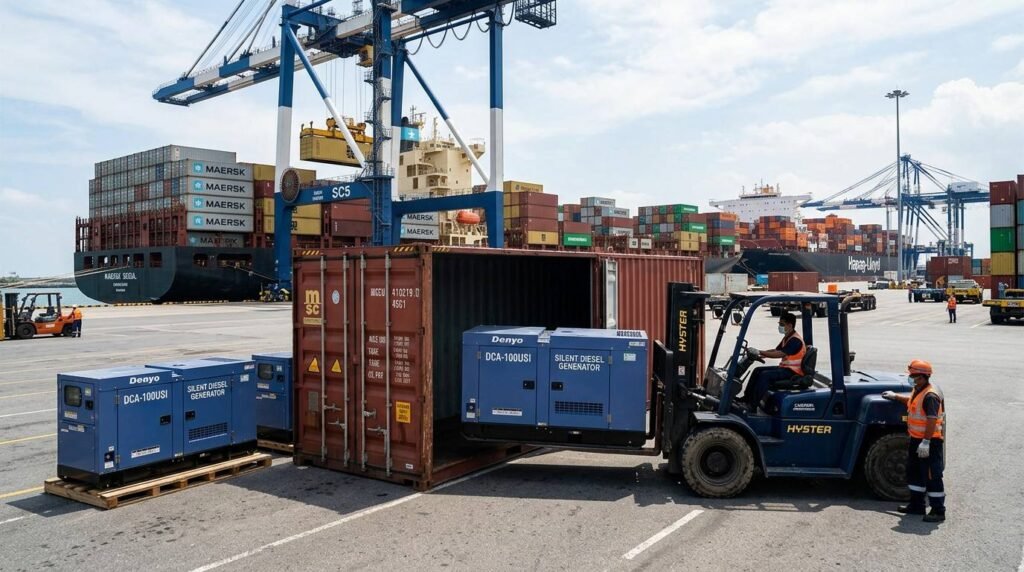
Logistics & Peak Season: Avoiding the “Shipment Delayed” Email?
You’ve done the quality inspection, verified the certificates, and paid the deposit. Now, you wait. And wait. And then you get the email: “Shipment delayed due to container shortage.” This usually happens because a middleman supplier doesn’t have the clout to secure space during peak seasons. Mark Shenng hates this because he misses the winter storm demand in Canada.
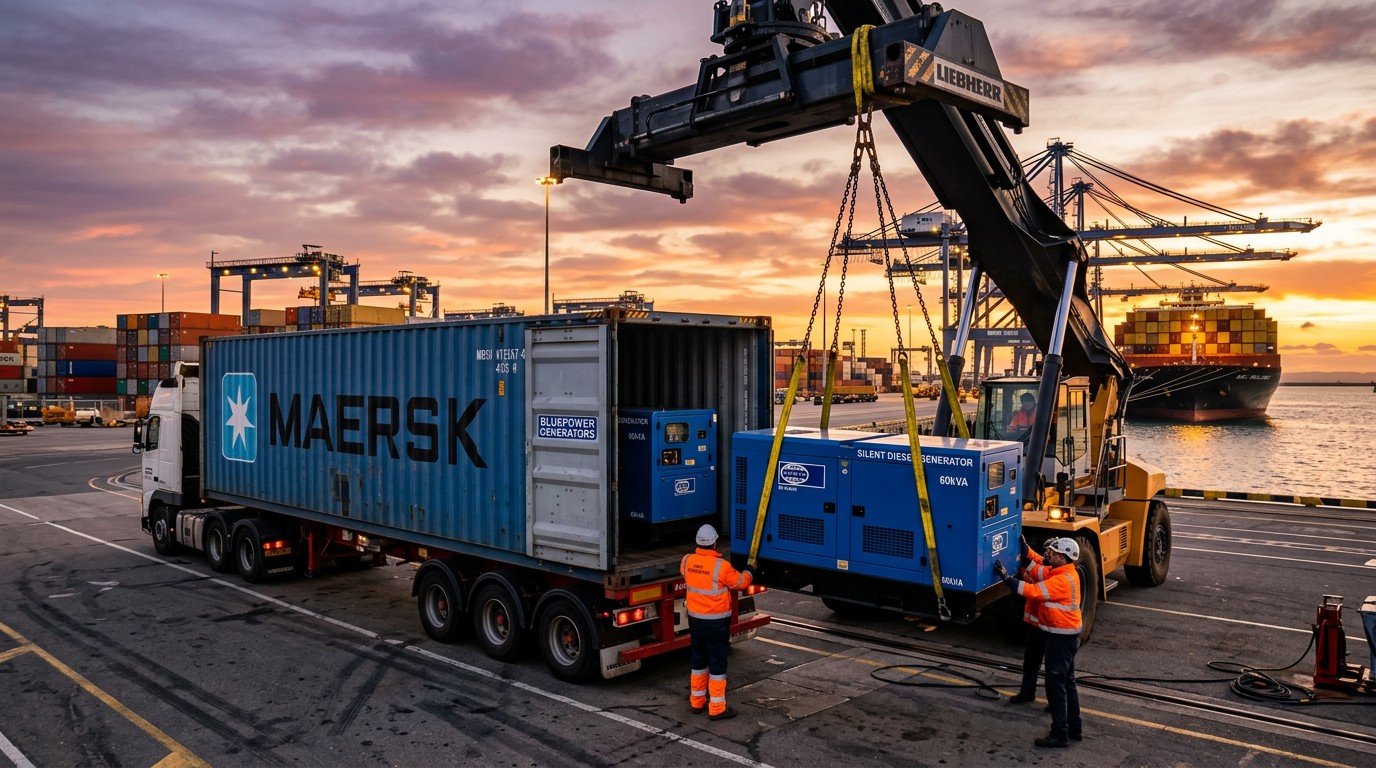
In June 2026, container shipping rates from China to North America have seen massive fluctuations. We utilize our 5 production lines to batch orders, giving us better leverage with freight forwarders. We also photograph the loading process and send the container seal numbers directly to your WhatsApp. No more “inefficient communication.” You see the units being locked into the container, and you know exactly when they are hitting the water.
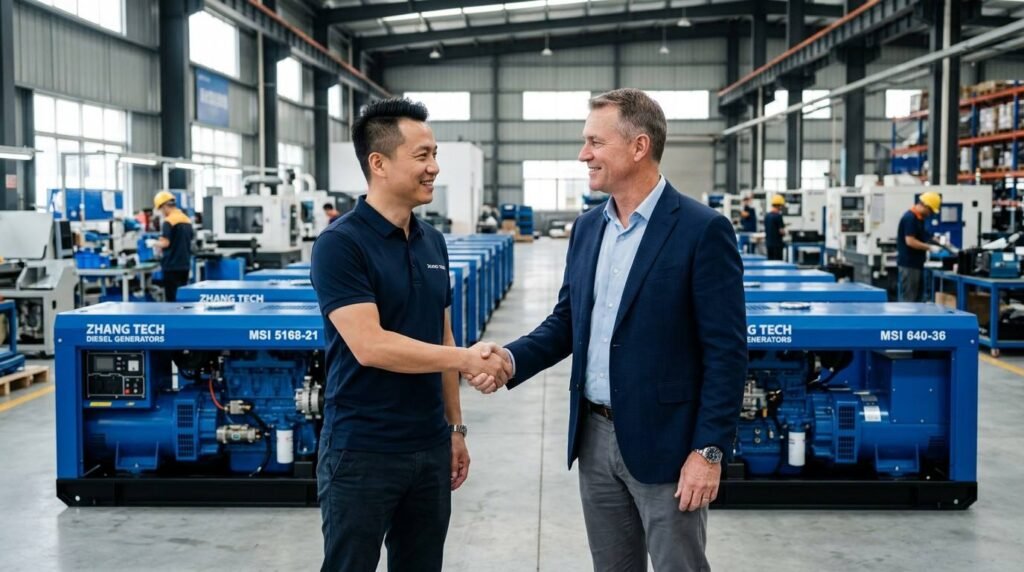
The GoCommins Difference: Why Direct-from-CEO Advice Matters?
I know you have options. You could go to a giant trading company with 50 sales reps who have never seen an oil filter. Or you could work with a factory owner who knows the torque curve of a 100kW Cummins engine by heart. We offer customizable Cummins gensets that middlemen can’t match. Whether you need a specific color for your brand or a specialized controller for a hospital contract, we do it in-house.
Mark Shenng doesn’t buy from me because I’m the cheapest. He buys because I solve his problems before they happen. I handle the certifications, the quality audits, and the logistics so he can stay assertive in his sales meetings. We aren’t just a supplier; we are your technical partner in China. If you’re ready to build a brand that lasts, stop talking to sales reps and start talking to the experts. Let’s get your business powered up!

Conclusion
Buying an overseas Cummins generator is a game of details. From verifying genuine G-Drive engines to auditing acoustic canopies and checking UL listings, every step protects your profit. Trust a factory-direct expert like GoCommins to handle the technical heavy lifting while you focus on growth. Let’s power your success!
FAQ: Avoiding Generator Supplier Scams
Q: How can I verify that a supplier’s UL 2200 or CSA certification is genuine before paying?
A: Ask for the certificate’s file number, then check it on the UL Online Certifications Directory or the CSA Group Product Listing and confirm the manufacturer’s name matches. Genuine certifications like UL 2200 for stationary generators are rigorous and expensive to maintain; suppliers who email photocopied certificates with no file number usually cannot produce the original.
Q: What emissions compliance do I need to import a generator into the USA or Canada?
A: North America enforces the world’s strictest nonroad diesel engine standards. For Tier-4 markets, the unit must meet EPA Tier 4 Final, which requires Selective Catalytic Reduction (SCR) and Diesel Particulate Filters (DPF) with a DEF tank. GoCommins provides the official EPA engine family certificate with every North American export so the container clears customs without seizure.
Q: How can I tell if a Cummins engine is genuinely new rather than a refurbished truck engine?
A: Check the Engine Serial Number (ESN) on the nameplate against the official Cummins genuine parts system, and inspect the cylinder block casting and turbocharger model. Refurbished truck engines are often repainted blue with a Cummins sticker added; they are not designed for the 24/7 G-Drive requirements of stationary power generation and typically fail under load.
Q: What makes a canopy truly silent, and what noise level should I expect?
A: Real silence requires mass: a 2.0mm-4.0mm cold-rolled steel canopy lined with high-density, fire-resistant mineral wool, plus an engineered baffle intake system. GoCommins units hit the 65-75 dB(A) at 7 meters standard required by many North American cities, verified by third-party noise test reports; thin 1.2mm canopies vibrate and amplify engine noise instead of dampening it.
Q: How can a factory-direct supplier prevent peak-season shipping delays?
A: A factory with its own production lines can batch orders and secure container space with better leverage. GoCommins photographs the loading process and sends container seal numbers directly to buyers, so you see the units locked into the container and know exactly when they ship, without middleman shipment-delayed emails during peak season.