
📅 Last Updated: June 28, 2026
You’ve spent days browsing Alibaba or walking through trade shows, and now you’re staring at three different quotations for a 100kW Cummins silent diesel generator. One supplier wants $8,000, another says $12,000, and a third—who probably has a very nice suit—is quoting you $18,000. You’re confused, your boss (or that assertive, dominant personality like my buddy Mark Shenng in Canada) is breathing down your neck, and you’re terrified that the cheap one will explode or the expensive one is just a scam. It’s the “Chinese Quote Trap,” and if you don’t know how to look past the bottom line, your “profitable” deal is going to turn into a technical and logistical nightmare that costs you your reputation.
To accurately compare Cummins diesel generator quotations from China, you must verify the specific engine series (Genuine Cummins G-Drive vs. used/refurbished), the emissions tier (EPA Tier 4 Final for North America is significantly more expensive than Tier 2), the alternator brand (Genuine Stamford vs. copy), and the thickness of the acoustic canopy (2mm vs. 4mm steel). Always demand a verifiable ISO 9001 factory audit and check for mandatory certifications like UL 2200 or CSA. A lower quote often hides costs in “certificate forgery” or sub-standard components that will be rejected by customs or fail under industrial load.
Don’t let technical ignorance turn your distribution business into a cautionary tale. I’m Alex Zhang, and I’ve overseen the production of thousands of units across our five production lines at GoCommins. I’ve seen every trick in the book, and I’m here to give you the expert’s magnifying glass so you can dissect those quotes like a pro and keep your profit model—and your sanity—intact.
Is the Engine a Real Cummins or Just a Very Convincing Blue Smurf?
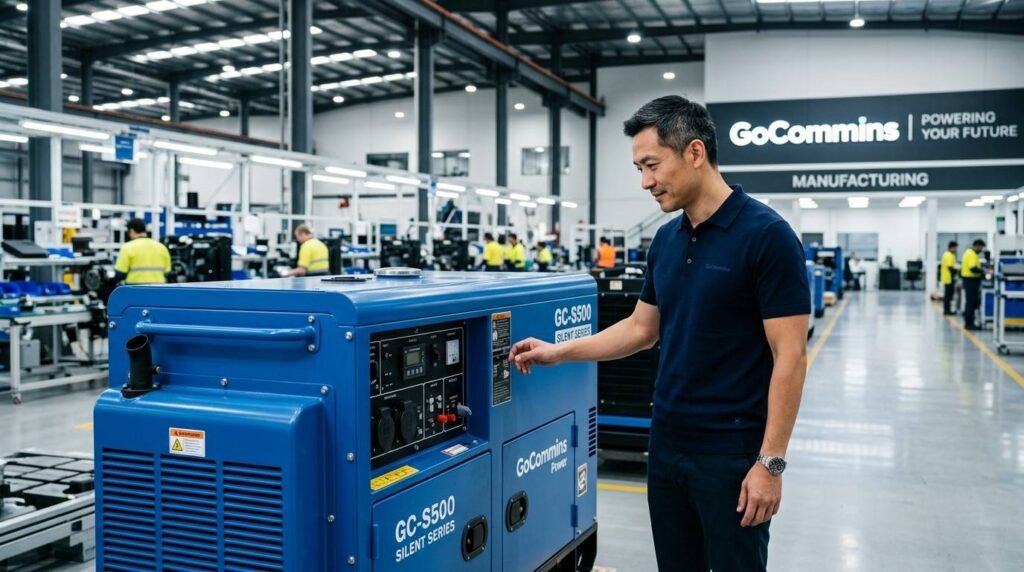
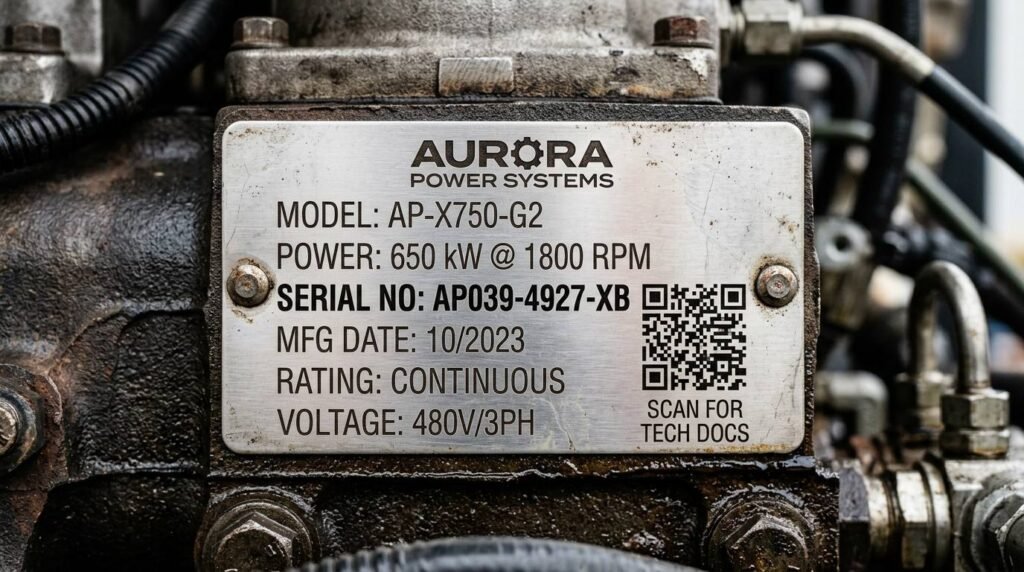
In the B2B world, the “fake” is the ultimate profit-killer. When you see a 100kW unit quoted at half the market price, the first thing I check is the engine’s serial number. Many “trading companies” will take a refurbished truck engine, paint it blue, and slap a Cummins sticker on it. These engines aren’t designed for the 24/7 “constant speed” requirements of power generation. At GoCommins, every engine is verified through the official Cummins global database before it ever hits our assembly line.
Listen, Mark Shenng knows sales, but he doesn’t know that a refurbished 6BT engine will throw a rod the moment a Canadian winter hits. You need to ask your supplier for the engine’s data sheet and a copy of the Cummins Authorization Letter. If they get defensive or start talking about “equivalent quality,” they are selling you a Smurf, not a Cummins. A genuine engine is the most expensive part of your quote, and it’s the one place you absolutely cannot afford to cut corners if you want your clients to trust your brand.
Does Your Quote Include the “Emissions Tax” for North America?
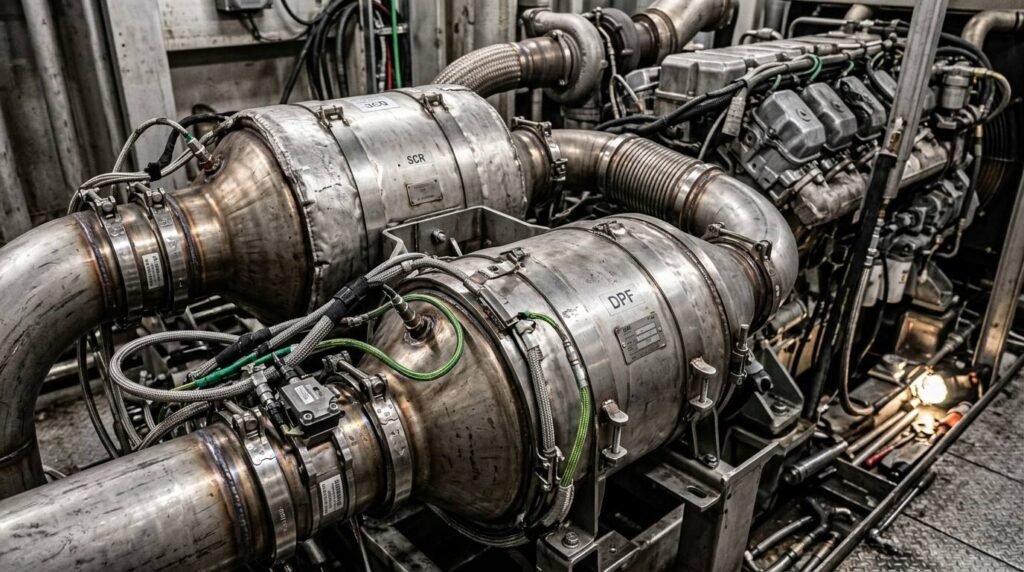
If you are shipping to Vancouver or New York, your quote had better mention EPA Tier 4 Final compliance. I see so many distributors get excited about a low price, only to find out the engine is a Tier 2 or Tier 3 model. In the US and Canada, installing a non-compliant engine is a fast track to a massive fine and a seized shipment at the port. Tier 4 Final technology involves Selective Catalytic Reduction (SCR) and Diesel Particulate Filters (DPF), which can add \$10,000 to the price of a 100kW unit.
If a supplier in China gives you a quote for a “North American Spec” generator that is under \$15,000, they are likely lying about the emissions tier. Mark Shenng rebranding strategy depends on his units being legal. We provide the official EPA engine family certificate with every North American export. Always check the “Exhaust System” section of your quote. If it doesn’t mention DEF (Diesel Exhaust Fluid) tanks or DPF sensors, it’s not Tier 4, and you’re about to have a very awkward conversation with a customs officer.
Is the Alternator a Genuine Stamford or a “Stamford-ish” Clone?
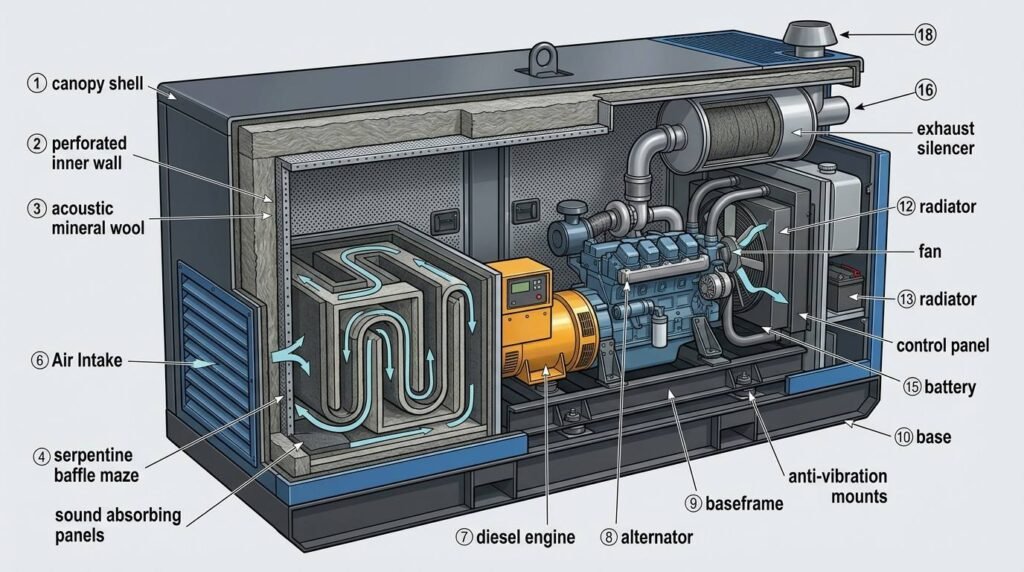
The engine makes the noise, but the alternator makes the money. A common trick in Chinese quotations is to list the alternator as “Stamford Technology” or “Copy Stamford.” These units look identical to the real thing but use thinner copper windings and lower-grade insulation. A genuine Stamford alternator with Class H insulation is rated for 24/7 industrial duty. A clone will overheat and burn out the moment your customer hits 80% load during a heatwave.
I tell my procurement managers: “The alternator is the heart of the electricity; don’t buy a knock-off heart.” A genuine unit offers up to 5% higher efficiency, which saves your customer thousands in fuel over five years. At my factory, we verify every Genuine Stamford unit using their hologram anti-counterfeit system. If your quote doesn’t explicitly state “Genuine Stamford with Verifiable Hologram,” you are being quoted for a clone. And as Mark knows, a “clone” is just another word for “warranty claim waiting to happen.”
Is the Silent Canopy Built Like a Library or a Tin Can?
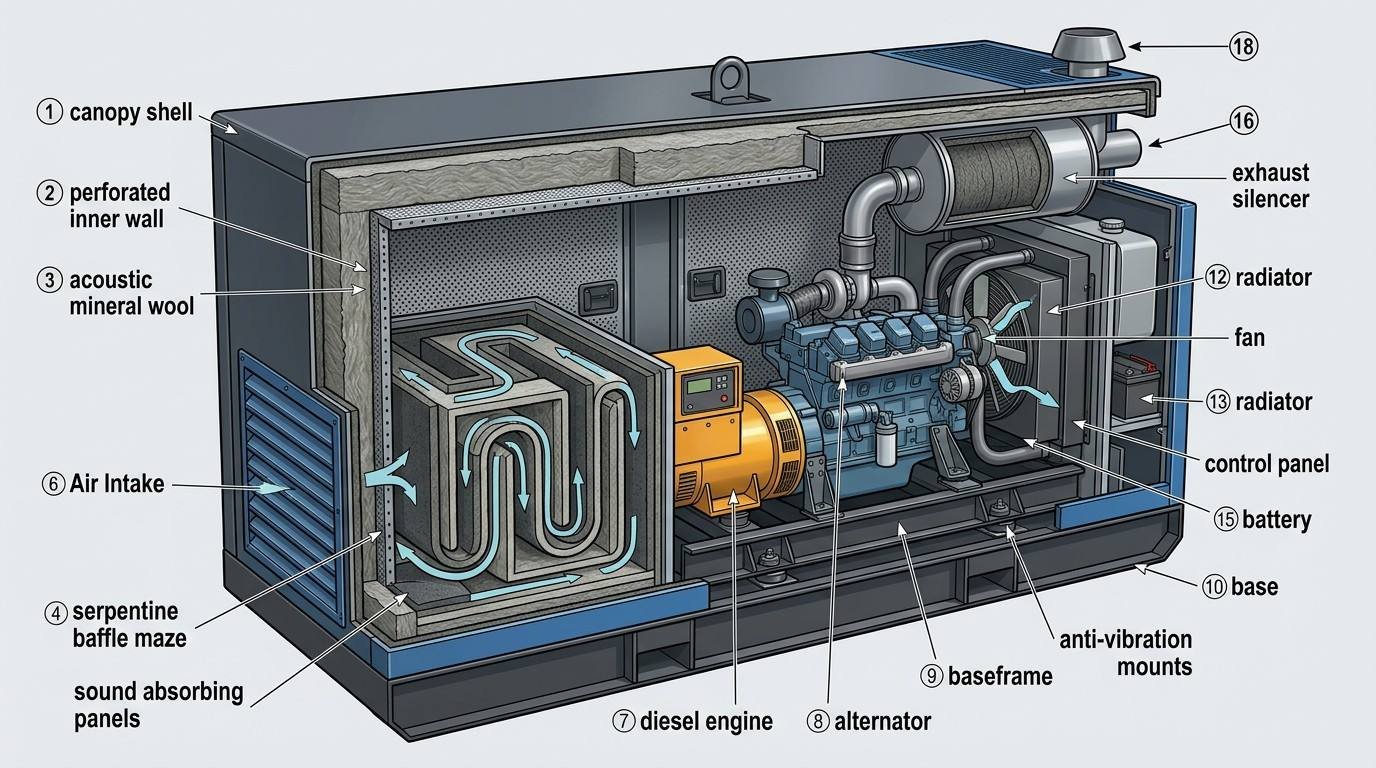
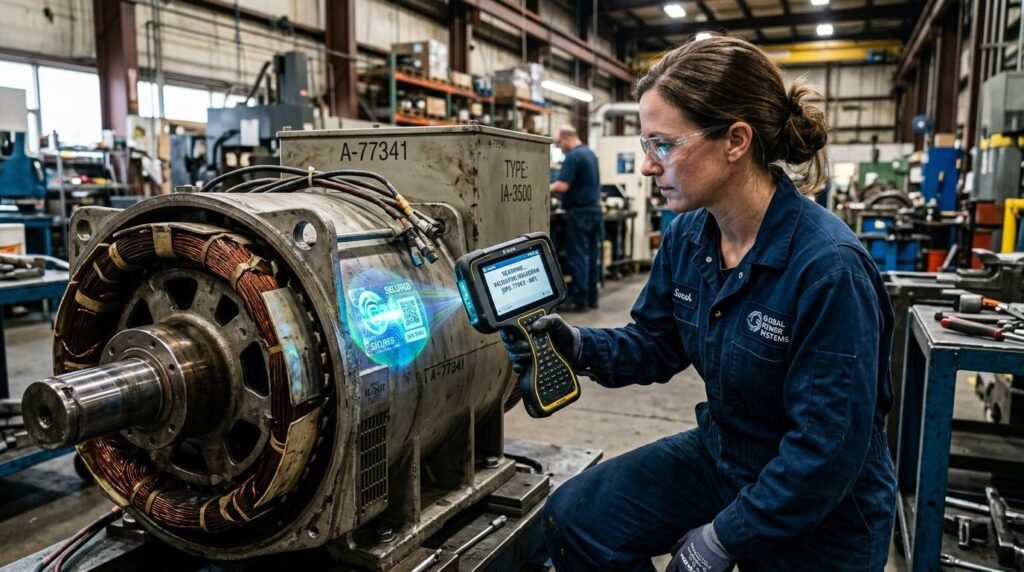
Everyone calls their generator “silent,” but in North America, noise ordinances are strict. A high-quality GoCommins silent canopy uses 2.0mm to 4.0mm cold-rolled steel and high-density, fire-resistant mineral wool. Cheap quotes use 1.2mm steel (which vibrates like a drum) and flammable furniture sponge. If you can hear the engine from three blocks away, your “silent” generator is an industrial eyesore that will get your customer sued by their neighbors.
When you compare quotes, look at the weight. A real silent generator is heavy because quality soundproofing has mass. We use a Labyrinth Baffle System for air intake to trap sound while letting the engine breathe. If your supplier’s quote is 500kg lighter than mine, it’s because they sold you a tin can. Mark Shenng sells at a premium because his units are actually quiet—hitting that 65-75 dB(A) at 7 meters target. Don’t let a thin box ruin your brand’s reputation for quality.
Are the Certifications Verifiable or Just Creative Photoshop Work?
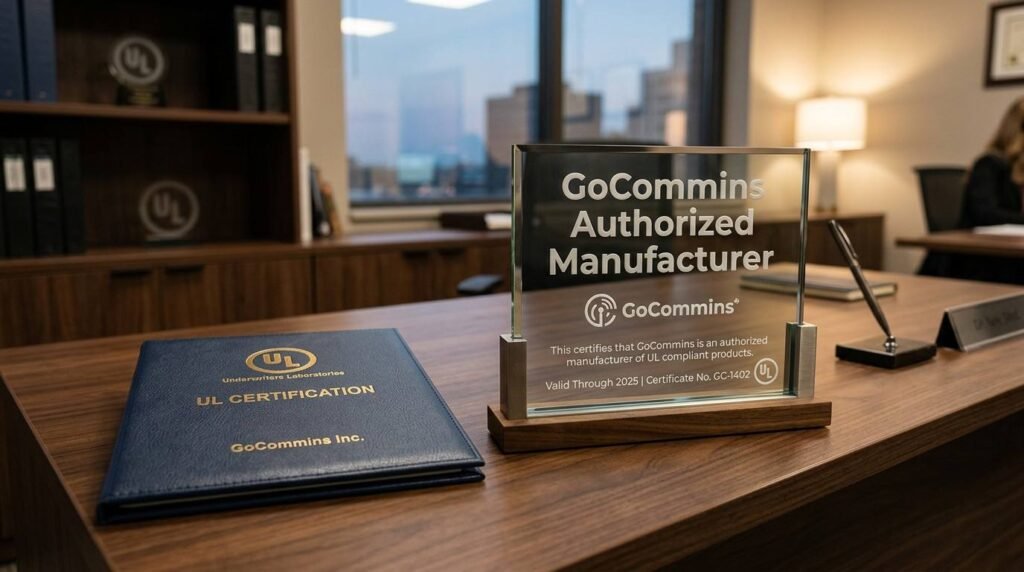
Mark Shenng’s biggest headache is “occasional certificate forgery.” Suppliers love to send PDFs with impressive logos like UL, CSA, or CE. But here is the CEO’s secret: UL 2200 for stationary generators is a specific, rigorous safety standard that costs thousands to maintain. Many factories “borrow” a certificate from another company and edit their own name onto it. If your shipment gets audited in Toronto and the certificate is fake, your container is headed to the scrap yard.
As an authorized OEM, we provide a verifiable Certification Pack with every unit. You can go to the UL or CSA websites, enter our file number, and see our factory name. If your supplier won’t give you a file number before you pay the deposit, they don’t have one. Period. In the B2B world, transparency is the only currency that matters. Don’t gamble with your logistics and payment terms on a supplier who treats “truth” like a suggestion.
Is Your “Low Price” About to Be Nuked by Hidden Logistics Fees?
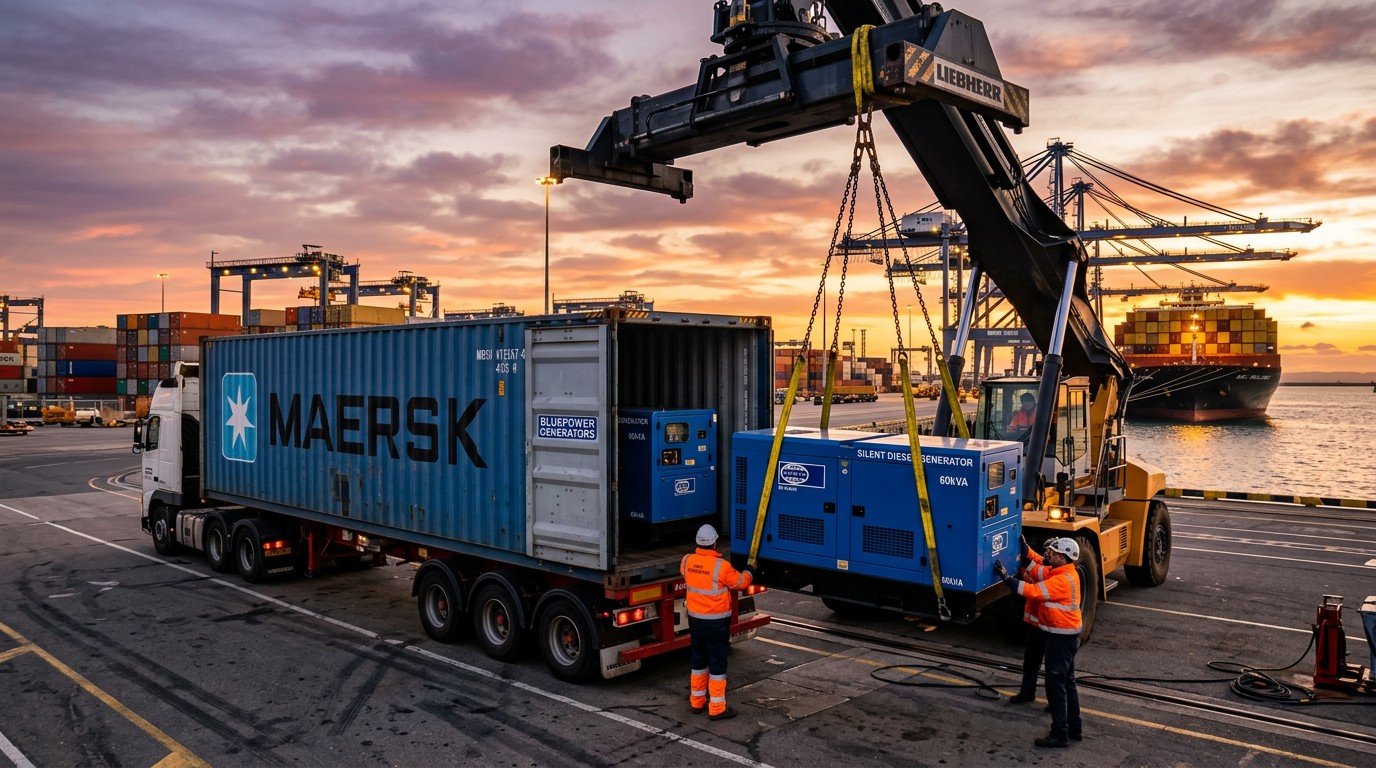
Finally, let’s talk about the logistics trap. A quote might look cheap because it’s “EXW” (Ex-Works), meaning you have to handle everything from my factory gate to your warehouse in Canada. If you aren’t an expert in international shipping indices, you are going to get slaughtered by port fees, storage costs, and “peak season surcharges” that the salesman “forgot” to mention. Mark Shenng hates delayed shipments because they ruin his peak sales season.
At GoCommins, our 5 production lines are integrated with a world-class logistics team. We provide transparent quotes that break down ocean freight, insurance, and import duties. We want you to know exactly what the unit costs when it lands on your dock. If your supplier’s quote is vague about shipping, it’s because they plan to hit you with a \$2,000 “administrative fee” the day before the container leaves. Be assertive like Mark: demand a clear breakdown of incoterms and a locked-in shipping schedule before you sign anything.
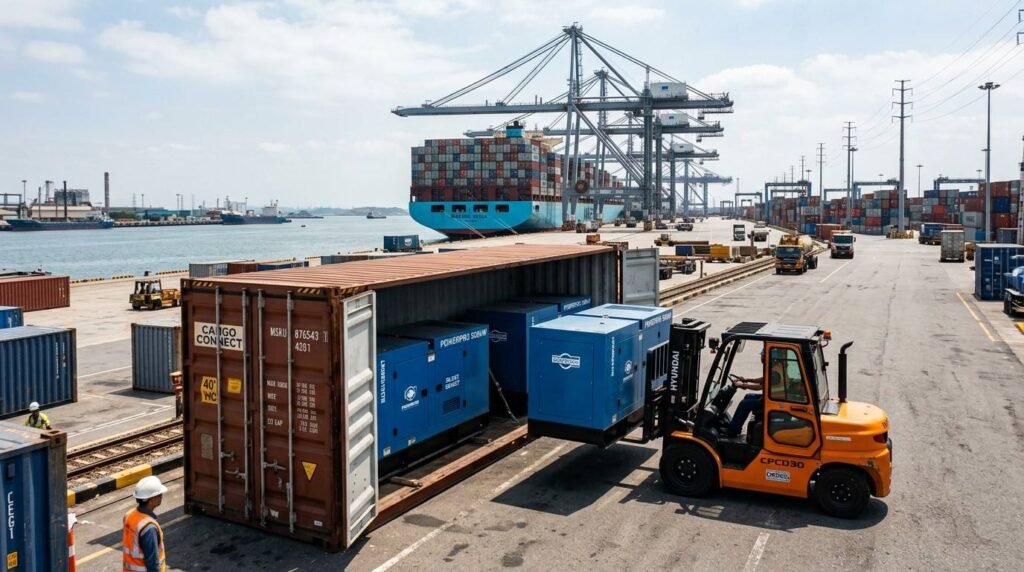
The GoCommins Difference: Why Factory-Direct Expertise Wins?
Look, I get it. You want the best quality for the lowest price. But in the world of Cummins diesel generators, “Value” is measured by uptime, not just the initial check you write. When you work with a factory like mine, you’re buying decades of engineering experience and five production lines of QC discipline. We don’t have “inefficient communication” because I’m the guy making the decisions. We solve your technical novices’ questions before they even ask.
We specialize in customizable Cummins gensets because we know that a hospital in Africa has different needs than a data center in North America. We don’t just sell generators; we sell the peace of mind that comes with knowing your quote is 100% accurate, 100% legal, and 100% genuine. If you’re ready to stop guessing and start growing your brand like Mark Shenng, give us a call. Let’s get those generators moving!
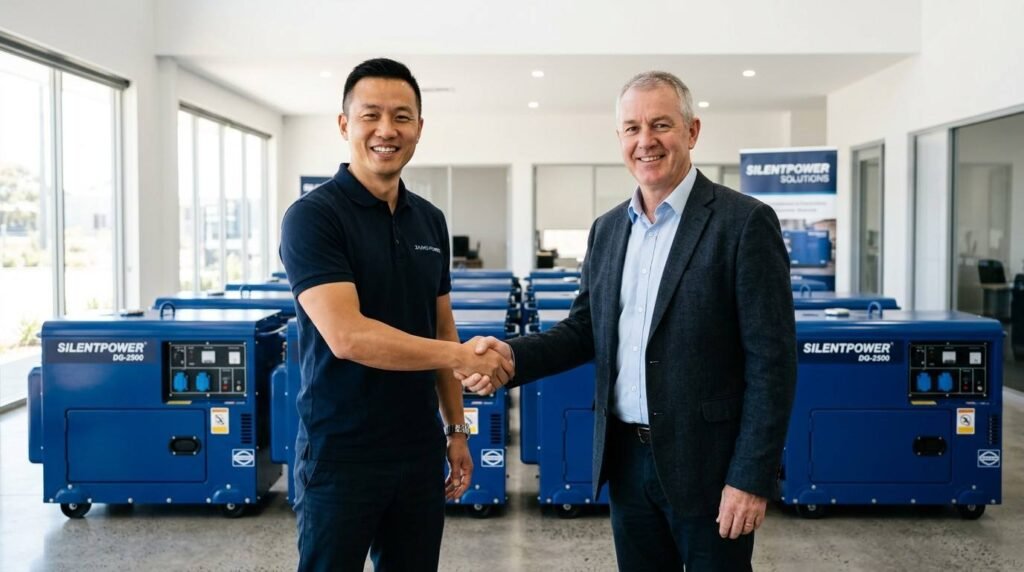
Conclusion
Comparing Cummins quotes is about looking past the price and verifying the soul of the machine. Focus on genuine engines, Tier 4 compliance, and verifiable certificates. Stick with a factory-direct partner like GoCommins, and you’ll never have to explain a seized shipment to your clients again. Let’s power up!
FAQ: Comparing Cummins Generator Quotes
Q: Why do quotes for the same 100kW Cummins generator vary so much between suppliers?
A: Because the specifications differ. A genuine Cummins G-Drive engine, EPA Tier 4 Final emissions package, genuine Stamford alternator, and a 2-4mm steel silent canopy cost far more than a refurbished engine, Tier 2 unit, clone alternator, and 1.2mm tin-can canopy. Verify the engine series, emissions tier, alternator brand, and canopy thickness before comparing bottom lines.
Q: What should I check in the exhaust system section of a quote for North America?
A: A North American-spec quote must mention EPA Tier 4 Final compliance with DEF (Diesel Exhaust Fluid) tanks and DPF sensors. Tier 4 Final technology can add around $10,000 to the price of a 100kW unit; if a North American Spec quote is far below that, the emissions tier is likely misrepresented, and a non-compliant engine will be rejected at customs.
Q: How can I verify that the alternator in a quote is a genuine Stamford, not a clone?
A: A genuine Stamford alternator carries a verifiable hologram anti-counterfeit mark and Class H insulation rated for 24/7 industrial duty. Clones use thinner copper windings and lower-grade insulation and overheat under load. If the quote does not explicitly state genuine Stamford with a verifiable hologram, assume you are being quoted for a clone.
Q: What does canopy weight and steel thickness tell you about a quote?
A: A real silent generator is heavy because quality soundproofing has mass. Quality canopies use 2.0mm-4.0mm cold-rolled steel and high-density, fire-resistant mineral wool; cheap quotes use 1.2mm steel and flammable foam. If one quote is around 500kg lighter than another, the unit will vibrate like a drum and fail city noise ordinances.
Q: Which incoterms should I use to avoid hidden logistics fees?
A: A cheap-looking quote is often EXW (Ex-Works), leaving port fees, storage, and peak-season surcharges for you to absorb. Demand a transparent breakdown of ocean freight, insurance, and import duties. GoCommins provides CIF/FOB quotes that show exactly what the unit costs when it lands at your port, with incoterms and a locked-in shipping schedule agreed before you sign.