
Commercial buildings
Define the priority circuits for an outage plan: building services, lighting, access systems and selected business equipment.
Planning question: which circuits transfer together, and which can remain off?
Bring your essential loads into focus. Plan a Cummins-powered 100kW generator package around the equipment you need to run, the way you operate and the conditions at your site.
Configured with a Cummins 6BTAA5.9-G2 engine, Stamford UCI274ES14 alternator and DSE7320 controller.
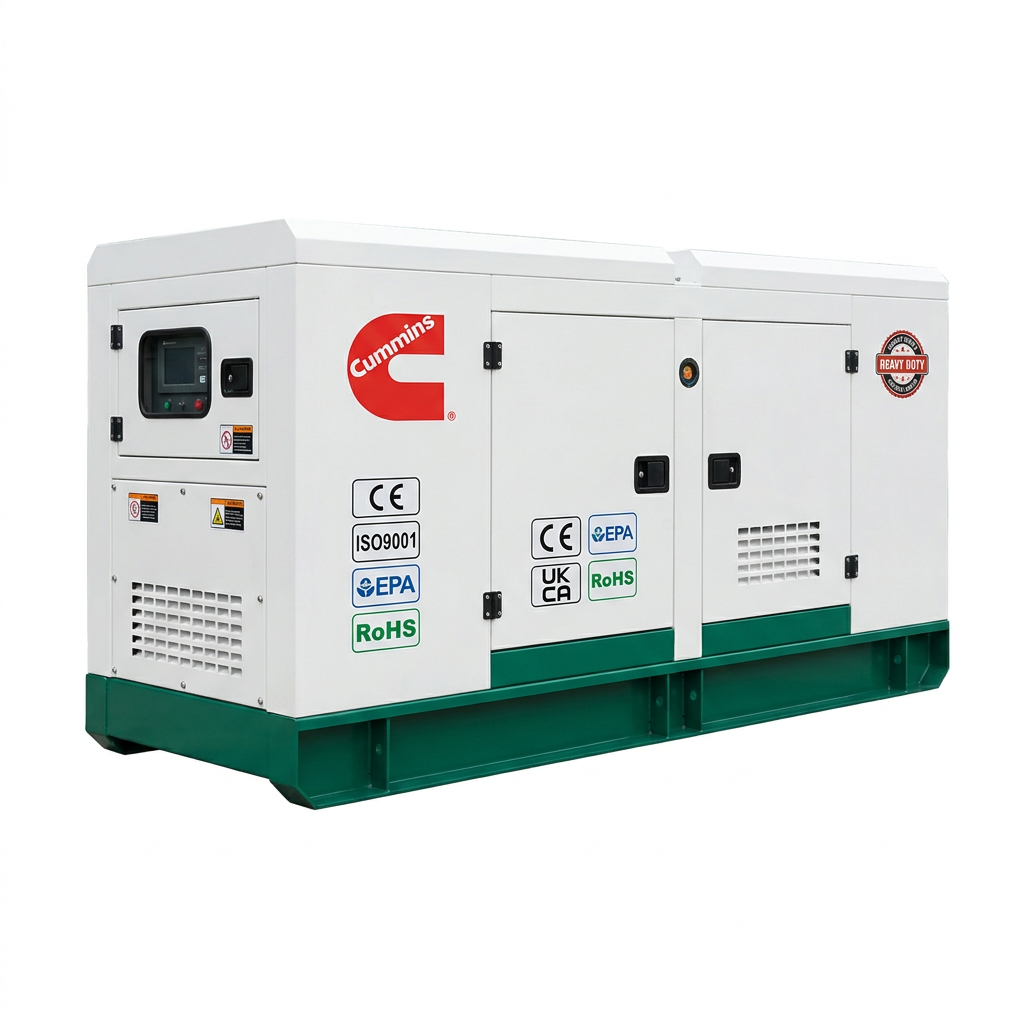
A 100kW requirement is a useful starting point. The next question is what that power must do: cover selected building circuits, support a production shift or supply equipment at a project site.
Separate simultaneous running loads from equipment that starts in stages. Record the operating hours and identify anything that needs a closer starting-performance review. This gives your supplier a practical basis for recommending the package.
Prepare an industrial load brief ↗Identify the equipment that must stay available and the loads that can be disconnected.
List motors, pumps and compressors, including their starting methods and operating sequence.
Describe outage coverage, regular running, load variation and expected hours of use.
Provide installation location, ambient conditions, access and any space or noise constraints.
The final datasheet should identify the assembled unit and its complete configuration. Use the following fields to keep your enquiry and quotation aligned.
| Configuration field | 100kW enquiry basis |
|---|---|
| Power class | 100kW. Confirm the applicable prime or standby rating in the model datasheet. |
| Engine package | Genuine Cummins 6BTAA5.9-G2 diesel engine. |
| Alternator | Genuine Stamford UCI274ES14 alternator. Confirm the electrical output requirements in the quotation. |
| Voltage, frequency & phase | State the site requirement so the offered electrical output can be checked against your installation. |
| Controller & transfer | Genuine Deep Sea Electronics DSE7320 controller. Confirm the ATS scope and any monitoring interfaces for your installation. |
| Enclosure & footprint | Specify open or enclosed installation, acoustic criteria and available service clearance; request final dimensions. |
| Fuel system & autonomy | Set the required running duration and request fuel-use data for the quoted operating conditions. |
| Order documentation | Agree the component schedule, acceptance evidence, drawings, packing scope and written warranty terms. |
Model-specific ratings and performance belong in the accepted quotation. Request the 100kW technical details →
Use the application questions below to describe your project. Each example calls for a load assessment rather than a selection based on the power label alone.
Define the priority circuits for an outage plan: building services, lighting, access systems and selected business equipment.
Bring the equipment list and shift pattern into the specification. Starting order matters when several machines share the supply.
Describe refrigeration cycling, loading equipment and the hours for which the selected loads must be supplied.
Account for changing equipment, site access and the intended operating period when preparing a temporary or remote-site enquiry.
These are application-planning examples. Confirm the suitability of the proposed unit against the complete load profile and site conditions.
The right enquiry explains how the generator should interact with the site. Identify who starts it, how a transfer request is generated and which information the operator needs to see.
Conceptual workflow for discussing the scope. Final timing, interlocks and protection settings must follow the approved project design.
A useful quotation is more than a model name. Establish what will be supplied, how it will be checked and what documents will accompany the unit.
Submit the load brief, duty, electrical output, delivery destination and required accessories. Identify any requirement that still needs engineering review.
Check the specified Cummins 6BTAA5.9-G2, Stamford UCI274ES14 and DSE7320 against the supplied documents. Record the enclosure and optional items, and obtain written approval for any proposed substitution.
Request the test plan, unit identification, operating documents and packing details. Set the inspection and delivery milestones in the accepted order.
Confirm the rating category for the exact model in the supplier’s datasheet. Your enquiry should explain the intended operating duty so the quoted rating can be assessed on the correct basis.
A running-power total alone does not establish motor-starting capability. Provide the starting methods, load sequence and allowable voltage and frequency variation for a project-specific assessment.
The 100kW package is specified with a genuine Cummins 6BTAA5.9-G2 diesel engine, genuine Stamford UCI274ES14 alternator and genuine Deep Sea Electronics DSE7320 controller. Request the component identification and supporting documents with your quotation and unit handover.
The offered enclosure, cooling arrangement and installation requirements determine the final footprint. Compare acoustic data using the same measurement distance, load and test conditions, and request the report for the quoted package.
Request data for the exact engine and generator configuration, including the operating load and test conditions. Use comparable conditions across quotations and assess fuel storage against the required operating duration.
Include the load list or required output, duty, voltage, frequency, phase, site conditions, quantity and destination. Add any enclosure, transfer-switch, monitoring and documentation requirements.
For further preparation, see the supplier verification checklist and Cummins Power Suite sizing resources.