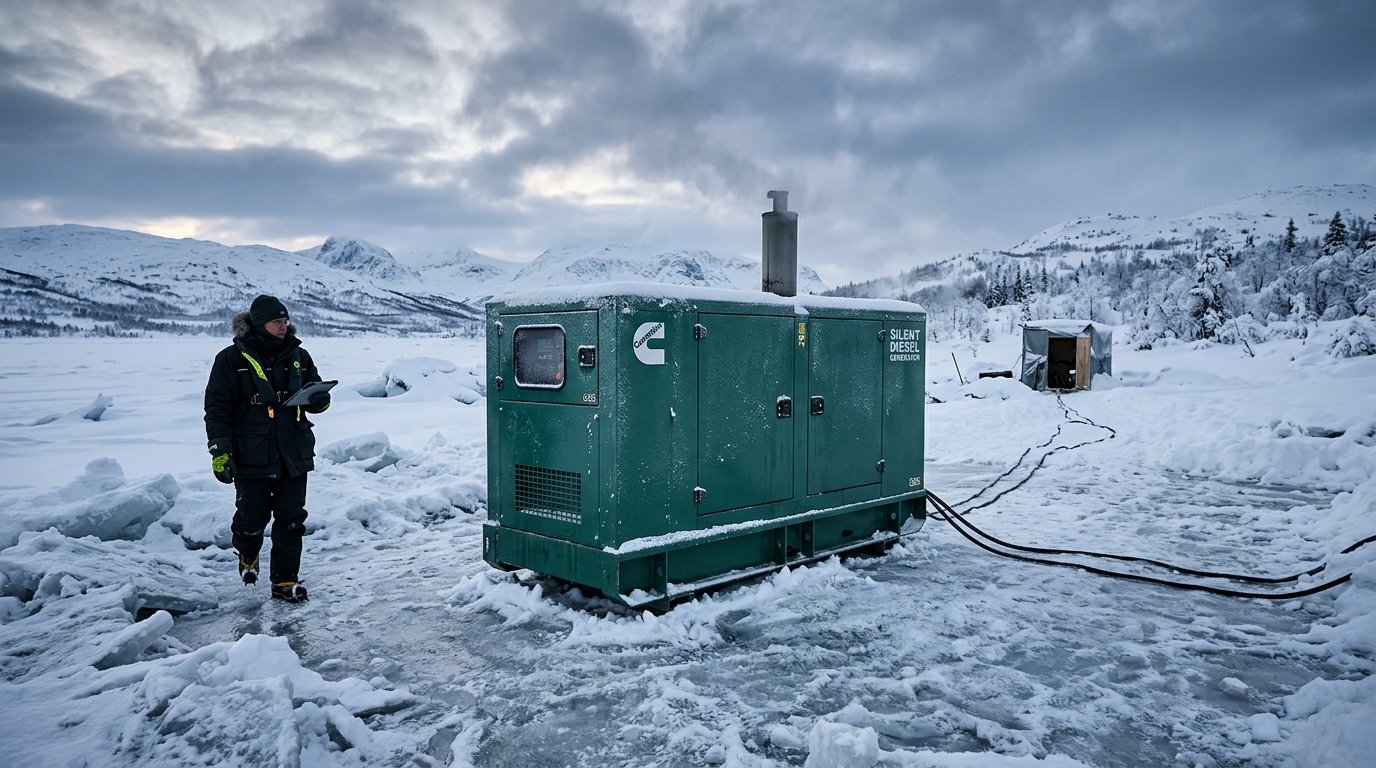

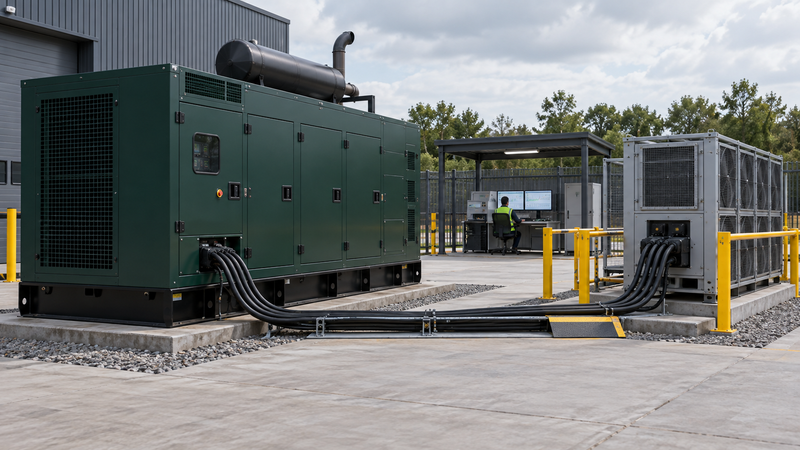
Product illustration: an enclosed GoCommins generator. The image is not a record of the acceptance tests discussed below.
A generator can look ready for export while its inspection records still leave important questions unanswered. For an overseas buyer, discovering a mismatch after delivery means coordinating people, parts and decisions across borders.
A factory acceptance test, or FAT, gives the purchasing team a defined review point before shipment. The useful question is not simply whether the engine starts. It is whether the supplied unit and its documented test results match the agreed order.
A practical Cummins silent generator FAT checklist should cover unit identity, the agreed electrical rating, the load-test schedule, controls, enclosure checks, noise evidence and the final document package. Agree the procedure and acceptance criteria before testing, record exceptions, and identify who can approve release for shipment.
What should a generator FAT prove?
Start by defining the scope in the purchase specification. Ask the supplier to separate routine production checks, any project-specific witnessed tests and the commissioning work that remains at the destination.
Cummins distinguishes prototype, factory and on-site testing in Section 8.2 of its T-016 Paralleling Application Manual. This is useful context for the different purposes of testing. The manual concerns paralleling systems; it is not a universal FAT procedure for every standalone generator.
For a single-unit purchase, turn the agreed scope into a short inspection and test plan. Give each item a required record, a reviewer and a clear acceptance decision. Ask a qualified project engineer to specify technical limits for the actual equipment and application.
Which unit details should buyers verify first?
Before reviewing performance, connect the evidence to the unit being purchased. Request readable photographs of the assembled generator and its identification plates. Cross-check these against the order and test report.
- Generator set model and serial number.
- Cummins engine model and engine serial number.
- Alternator make, model and serial number.
- Controller model and agreed software or settings record, where relevant.
- Ordered voltage, frequency, phase arrangement and duty designation.
- Enclosure version and included accessories.
An engine brand is only one part of the assembly. Identify the manufacturer of the complete generator set and the party responsible for its test report. A component label or an engine document should not be presented as certification of the complete package.
What belongs in the load-test record?
Ask for the test schedule before the witness session. It should state the proposed load steps, time at each step, measurement points, instrument details and acceptance criteria. Any requested overload test needs separate agreement and confirmation that it is appropriate for the equipment rating.
| Review item | Evidence to request | Purchasing decision |
|---|---|---|
| Rating basis | Agreed duty, kW/kVA, voltage, frequency and test conditions | Does the report use the same basis as the order? |
| Applied load | Load-bank type, load values, power factor and duration | Was the agreed test actually performed? |
| Recorded readings | Time-stamped electrical and engine readings specified in the plan | Can the reviewer assess the results against the agreed limits? |
| Changing load | Agreed step-load sequence and recorded response, if included | Were the required operating changes demonstrated? |
| Exceptions | Deviations, corrective actions and any retest results | Are outstanding items closed or explicitly accepted? |
A headline statement such as “full-load test passed” is difficult to audit without its conditions and readings. Also ask what the test does not cover. Do not assume that a factory load-bank run demonstrates the behaviour of every motor, UPS or other load at the eventual installation.
How should controls and accessories be checked?
List the functions included in the order rather than relying on the controller model alone. For example, specify which start requests, indications and interfaces the supplier will demonstrate, and which depend on equipment supplied by another contractor.
Where an automatic transfer switch, remote monitoring package or external panel is included, identify the exact hardware and the agreed demonstration. Distinguish a simulated signal from a test using the supplied equipment.
Protection checks must follow an approved procedure carried out by qualified personnel. Ask how the supplier will record the results; do not request improvised fault conditions during a video call.
What evidence matters for a silent enclosure?
Review the physical package as well as the electrical results. Ask for photographs of service doors, seals, locks, access panels, lifting information and the ordered fuel-tank arrangement. Record any damage or incomplete finishing before release.
For a noise claim, request the measurement method, distance, load condition, enclosure configuration, measurement positions and reported quantity. Put the agreed limit and its measurement basis in the specification. A number without its conditions gives the buyer little basis for comparison.
Cummins describes dedicated precision sound testing at its Acoustical Technology Center. That illustrates the importance of controlled measurement; it does not establish a noise rating for a different supplier’s enclosure. A phone recording is useful for observing a demonstration, but should not replace the agreed measurement report.
Can an overseas buyer witness testing remotely?
Yes, if the supplier and buyer agree a workable plan. Ask for a running order, the unit identification at the start, readable instrument views and access to the resulting records. Nominate one person to collect questions and approve the inspection minutes.
A live session should supplement the document package. If the connection fails, record which steps were observed and agree how any missed evidence will be reviewed. Where the contract calls for independent inspection, confirm the inspector’s scope and access in advance.
What should be signed off before shipment?
Use a release checklist that joins the inspection record to the commercial order:
- Confirm the supplied unit matches the approved configuration.
- Collect the signed test report, identification photographs and agreed drawings.
- Close the exception list or document the buyer’s written acceptance of remaining items.
- Check that manuals and the agreed accessory and spare-parts lists are included.
- Record packing, shipping preparation and responsibility for destination commissioning.
Keep factory release and final site acceptance as separate milestones. The purchasing team should know who will inspect transport condition, complete installation checks and approve the equipment for service after arrival.
This guide is a purchasing checklist. The applicable equipment documents, project specification and approved test procedure determine the actual test requirements.