
📅 Last Updated: June 25, 2026
Imagine the scene: Your production line is humming at full capacity, churning out parts for a high-stakes contract. Suddenly, the grid fails. The silence is deafening. Thousands of dollars in labor costs sit idle, delicate CNC machines lose their calibration, and your most assertive distributor—let’s call him my friend Mark Shenng from Canada—is already blowing up your phone because his rebranding schedule is now in jeopardy. A power outage isn’t just an inconvenience in the factory world; it’s a direct assault on your profit margin and your reputation.
To size a diesel generator for your factory, you must first calculate the “Running Watts” of all equipment and add the “Starting Watts” (surge power) of your largest motors. Use the formula: kVA = (kW / Power Factor). For most industrial applications, assume a 0.8 Power Factor. Finally, add a 20-30% safety margin to account for future growth and to prevent the engine from running at maximum capacity, which ensures long-term reliability and fuel efficiency.
Don’t let technical ignorance turn your factory into a dark, expensive warehouse. I’m Alex Zhang, and I’ve overseen the production of thousands of units across our five production lines at GoCommins. I’ve seen every sizing mistake in the book. Stick with me, and I’ll give you the expert blueprint to keep your lights on and your machines spinning without overpaying for “ghost power.”
What Equipment is Actually Eating Your Power?
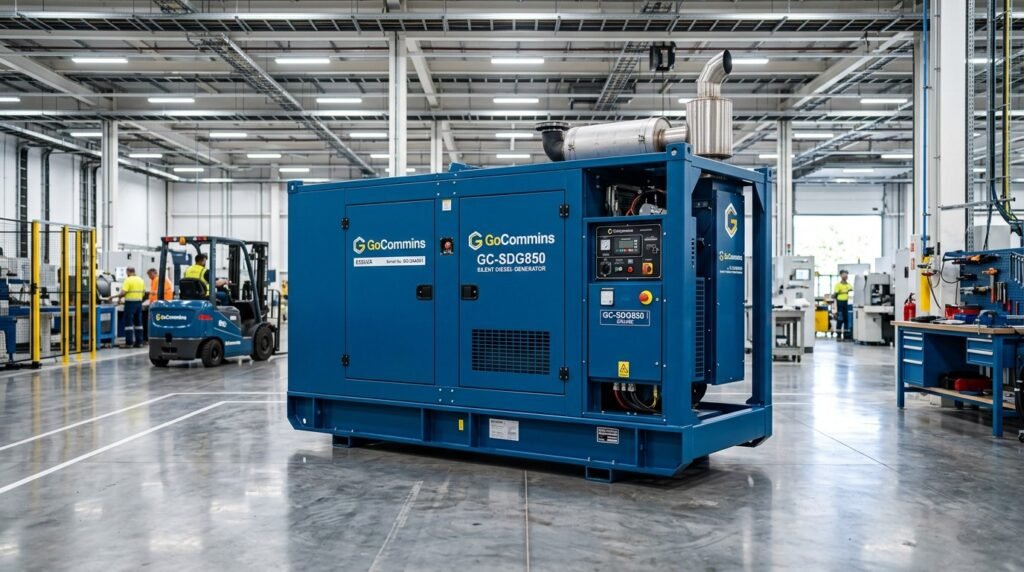
Before you give me a call at GoCommins to place an order, you need to conduct a brutal audit of your factory floor. Most technical novices make the mistake of looking only at the “nominal power” listed in the manuals. That’s a rookie move. You need to identify every single machine, from the massive air compressors to the coffee machine in the breakroom. Every watt counts when you’re building a reliable backup power system.
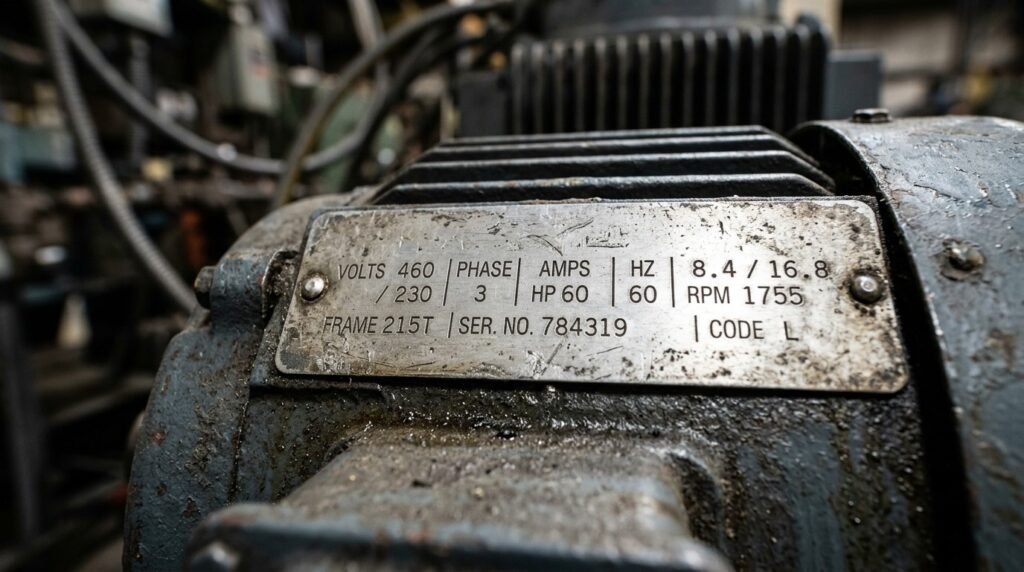
I often tell Mark that his “premium” rebranding strategy only works if the machine actually runs. If you miss even one high-draw motor in your calculation, the whole system will trip the moment the grid goes down. Walk through your facility and look for the nameplates on your equipment. You aren’t just looking for “Watts”; you’re looking for “Amps” and “Voltage.” In the industrial world, these are the only numbers that tell the truth about a machine’s electric diet.
Inductive vs. Resistive Loads: Why Some Machines Kick Harder?
Not all machines are created equal. A light bulb is a “resistive load”—it takes the same amount of power to start as it does to run. An industrial motor, however, is an “inductive load.” These are the bullies of the electrical world. When a motor starts, it requires a Starting Current (Inrush Current) that can be three to six times its normal running current. If your generator isn’t sized to handle that “kick,” the engine will choke and stall.
I’ve seen assertive procurement officers lose their cool because their “100kW” generator couldn’t start an 80kW compressor. It’s simple physics, but physics doesn’t care about your job title. At our factory, we use advanced Cummins PowerCommand controllers to manage these surges, but you still need the raw “muscle” in the engine to back it up. If your factory has heavy machinery, you must size for the peak surge, not the average hum.
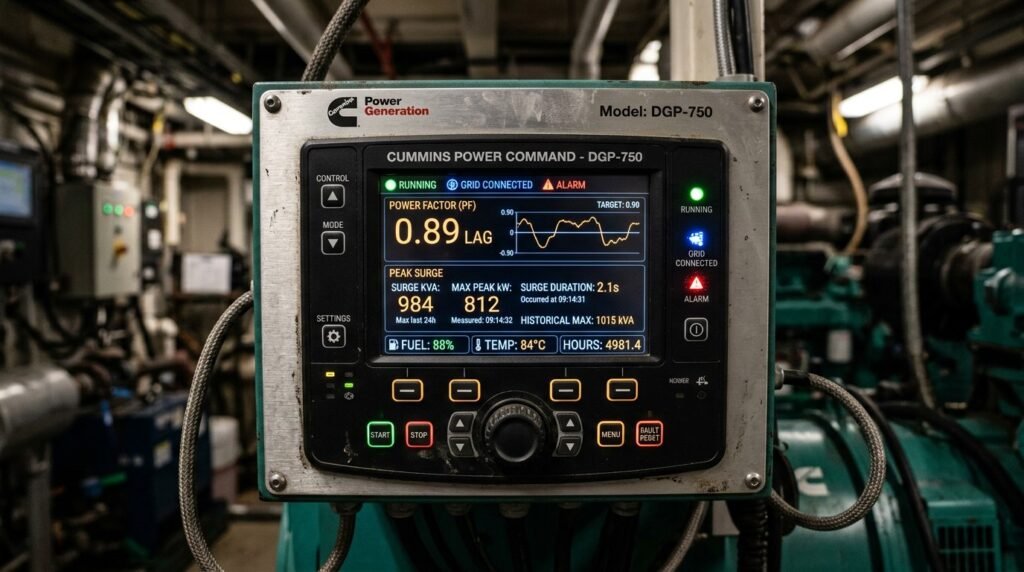
Understanding kVA and Power Factor: The Invisible Tax?
In the B2B world, I see a lot of “certificate forgery” where suppliers lie about kVA ratings. Let’s get the math straight: kW is the “real power” that does the work, while kVA is the “apparent power.” The relationship between them is the Power Factor (PF). In most industrial diesel generators, the standard PF is 0.8. This means a 125kVA generator only provides 100kW of actual working power.
If you buy a 100kVA unit thinking it will give you 100kW, you’ve just shorted yourself by 20%. That’s a recipe for a “missed peak sales season” when your equipment fails to start. Mark Shenng likes competitive pricing, but he knows that a cheap, undersized unit is the most expensive mistake he can make. We ensure every GoCommins unit is rated with absolute transparency. We don’t sell “optimistic” numbers; we sell verifiable performance.
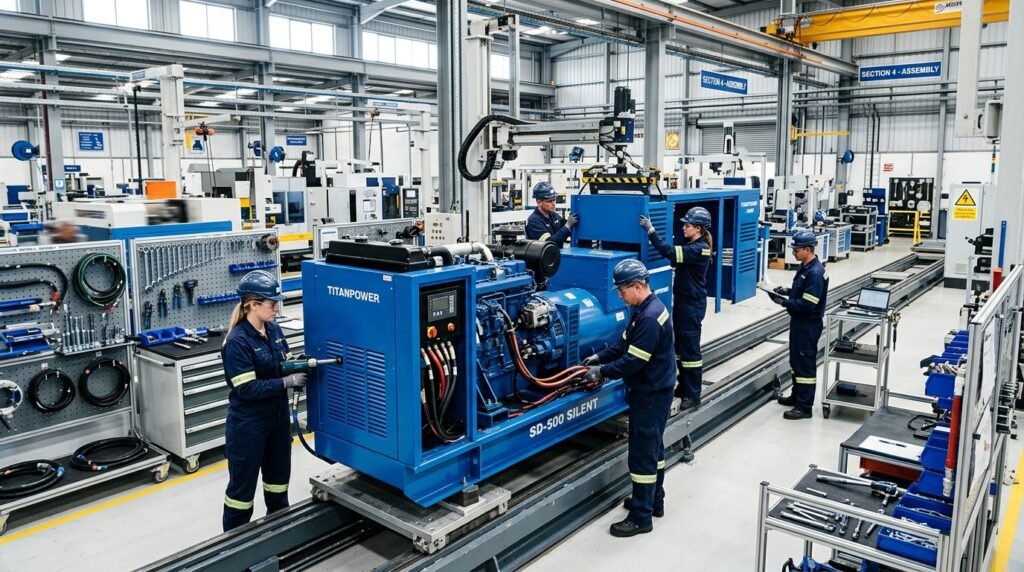
The Rule of 20%: Why Alex Zhang Never Runs at 100%?
You might think that if your factory needs 100kW, you should buy a 100kW generator. Wrong. In my factory, we never run our engines at their absolute limit for long periods. It’s bad for the pistons, bad for the fuel economy, and bad for your blood pressure. You should always follow the 20% Reserve Capacity Rule. If your total peak load is 80kW, you need a 100kW generator.
This safety margin isn’t just about protecting the engine. It’s about your future. Most factories grow. If you size your generator exactly to your current needs, you’ll have to buy a whole new unit the moment you add a new production line. Mark’s profit model depends on rebranding and distributing at a premium in Canada; he can’t do that if his customers feel “trapped” by an underpowered machine. Size for today, but leave room for tomorrow.
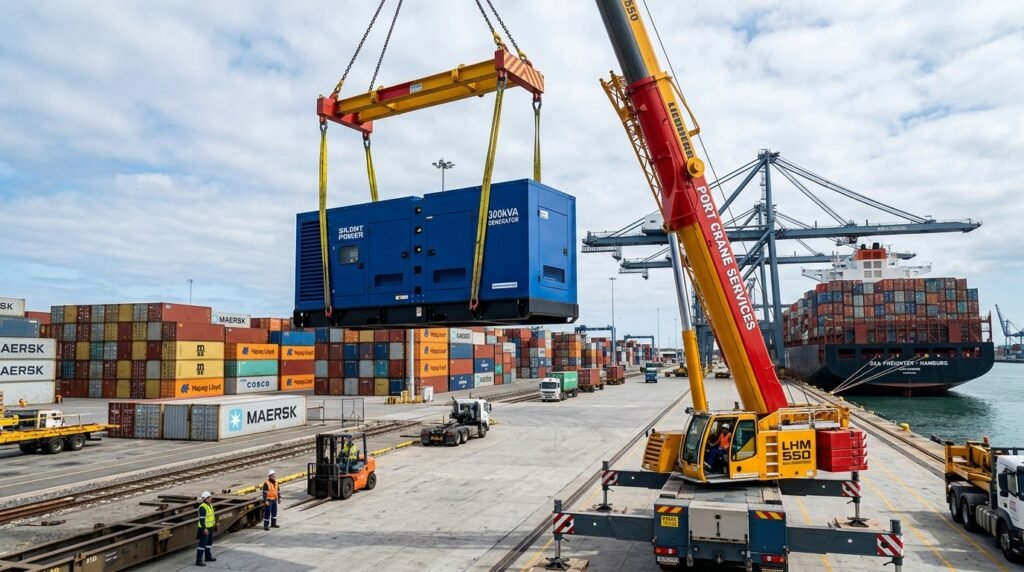
Voltage and Frequency: Protecting the Brains of Your CNC?
Modern factories aren’t just about brute force; they are about precision. Your CNC machines, servers, and automated robots are incredibly sensitive to Voltage and Frequency fluctuations. A generic, poorly-regulated generator will produce “dirty power” that can fry the delicate circuit boards of your most expensive assets. This is where the Cummins name earns every penny of its price tag.
We utilize authentic Cummins alternators and digital voltage regulators to ensure a “clean” sine wave. When I talk to procurement managers at large enterprises, they don’t care about the color of the paint; they care about the Total Harmonic Distortion (THD). Keeping your THD under 5% is non-negotiable for high-tech manufacturing. If your supplier can’t provide a THD certification, they are gambling with your facility’s electronics.
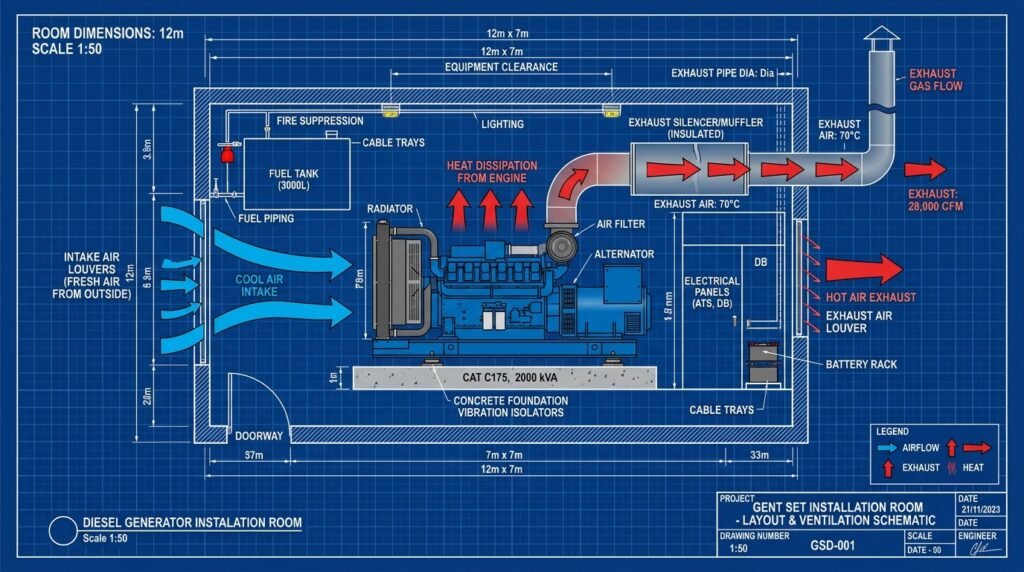
Site Conditions: Does Altitude and Heat Steal Your Power?
Here is a secret the “sales-only” guys won’t tell you: A generator that produces 100kW in my climate-controlled factory in China will not produce 100kW in a humid jungle in Vietnam or a high-altitude mining site in the Andes. You have to account for Generator Derating. For every 300 meters of altitude or every 5 degrees above standard temperature, you lose a percentage of your engine’s horsepower.
If your factory is in a harsh environment, you might need to “upsize” your unit by another 10-15% just to get the rated output you actually need. This is a common pain point: inefficient communication with a supplier leads to a unit that arrives but “feels weak.” As an authorized OEM manufacturer, we provide the exact derating charts for every Cummins engine model. We make sure you know exactly what that machine will do when it hits the ground in your specific location.
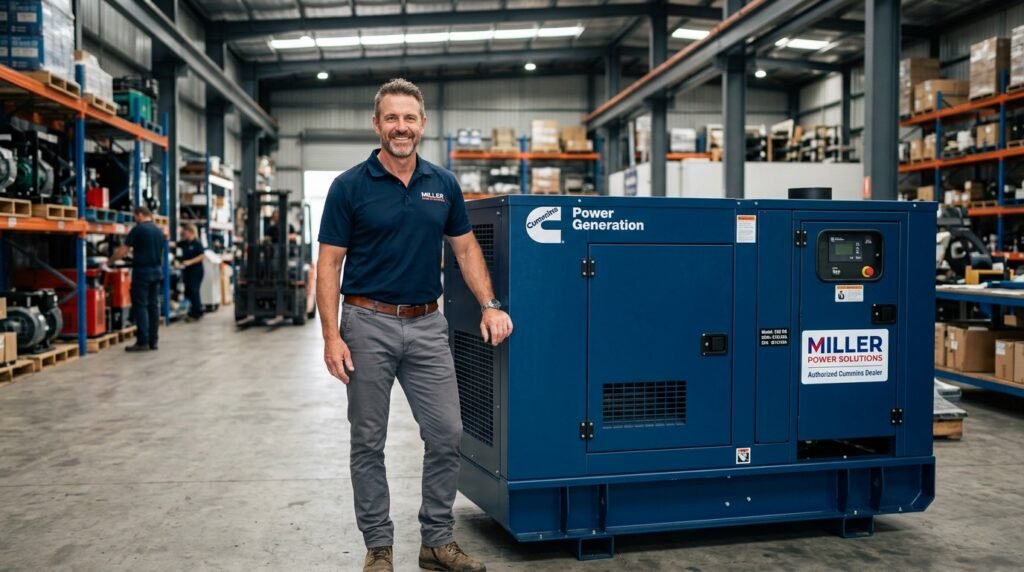
Why Three-Phase Power Is the Standard for Industrial Success?
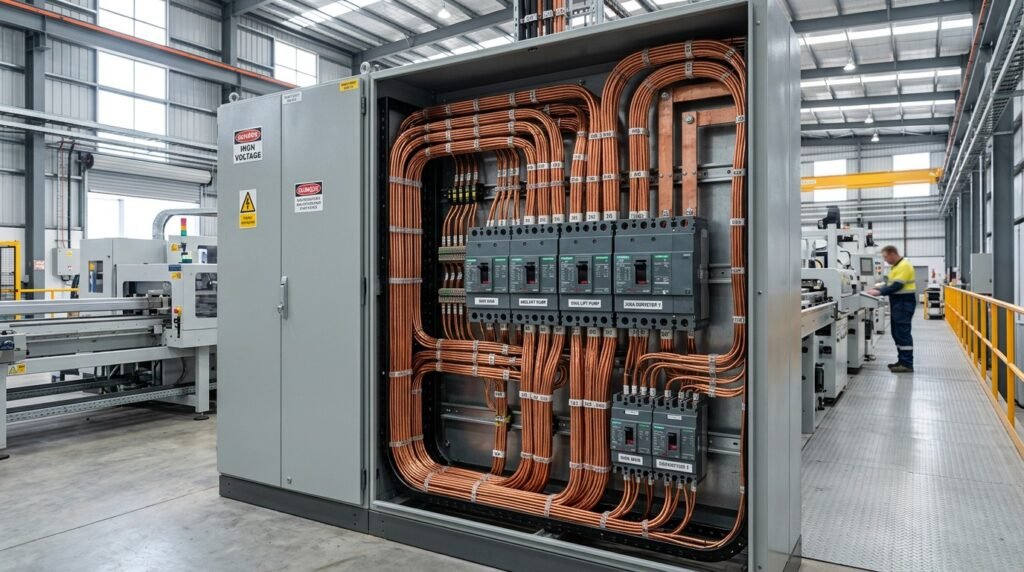
If you’re running a factory, you are almost certainly using Three-Phase Power. Most technical novices try to use single-phase generators for industrial work, which is like trying to win a Formula 1 race in a golf cart. Three-phase power allows for smaller wires, more efficient motors, and a much smoother delivery of energy to your heavy equipment.
At GoCommins, our 5 production lines are optimized for 380V-480V three-phase configurations. We understand that your logistics and payment terms are important, but the internal wiring of your generator is what determines if it will actually interface with your factory’s main breaker panel. If you aren’t sure whether your facility is 208V or 480V, stop everything and call an electrician. Guessing here is the fastest way to see a \$20,000 flash of blue light and a cloud of smoke.
The GoCommins Difference: Why Direct-from-CEO Advice Matters?
Look, you can find a generator anywhere on Alibaba or at a trade show. But when you buy from me, you’re buying from someone who lives and breathes diesel. We don’t just “source” units; we build them. I know the torque curve of a 100kW Cummins engine better than I know my own birthday. We offer customizable Cummins gensets because we know that no two factories are identical.
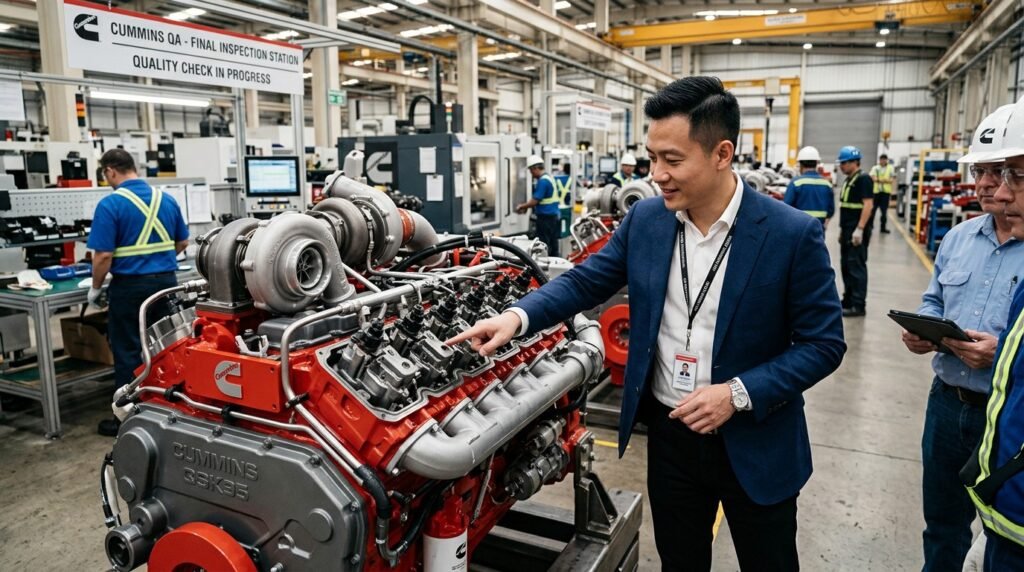
My typical customer, like Mark, understands sales but lacks technical expertise. That’s perfectly fine—that’s why I’m here. We provide the quality inspection and the certifications (EPA, UL, CSA) so you don’t have to worry about occasional certificate forgery from middlemen. We handle the logistics and the stress, so you can focus on what you do best: running your business and dominating your market.
Conclusion
Sizing a generator doesn’t have to be a nightmare. Audit your equipment, account for the starting surges, apply the 20% rule, and always check your site conditions. With a perfectly sized Cummins unit from GoCommins, you aren’t just buying a machine; you’re buying the “silence” of knowing your factory will never stop.
FAQ: Factory Backup Power & Generator Sizing
Q: How do I size a diesel generator for my factory?
A: First calculate the Running Watts of all equipment, then add the Starting Watts (surge power) of your largest motors. Use the formula kVA = kW / Power Factor (assume 0.8 for most industrial applications), then add a 20–30% safety margin for future growth and to keep the engine from running at maximum capacity — protecting long-term reliability and fuel efficiency. GoCommins engineers can validate your load calculation and recommend the right Cummins model.
Q: What happens if my generator is undersized for my production line?
A: An undersized generator stalls on motor start-up surges, drops frequency and voltage, and can shut down exactly when you need it most — leaving CNC machines uncalibrated, labor idle, and delivery deadlines missed. GoCommins helps you size with the correct starting-watts headroom so your line keeps running through every grid event.
Q: Why is a safety margin so important in factory generator sizing?
A: Motors, compressors, and pumps draw several times their running current on start-up, and factories typically add equipment over time. A 20–30% margin prevents overload trips and keeps the engine below maximum load, which extends service life and improves fuel economy. GoCommins builds this margin into every factory recommendation.
Q: What damage can a power outage cause to modern factory equipment?
A: Beyond idle labor, outages cause CNC calibration loss, corrupted PLC data, ruined batches, and thermal stress on electronics. A properly sized Cummins diesel genset with an ATS restores power within seconds, protecting both your machinery and your production schedule. GoCommins supplies complete backup systems, not just engines in boxes.
Q: How does GoCommins support factory customers with custom backup power systems?
A: GoCommins manufactures customizable Cummins generator sets across five production lines, including ATS integration, automatic start control, and soundproof enclosures suited to factory environments. We provide factory test reports and after-sales support so your production line has dependable, documented backup power.